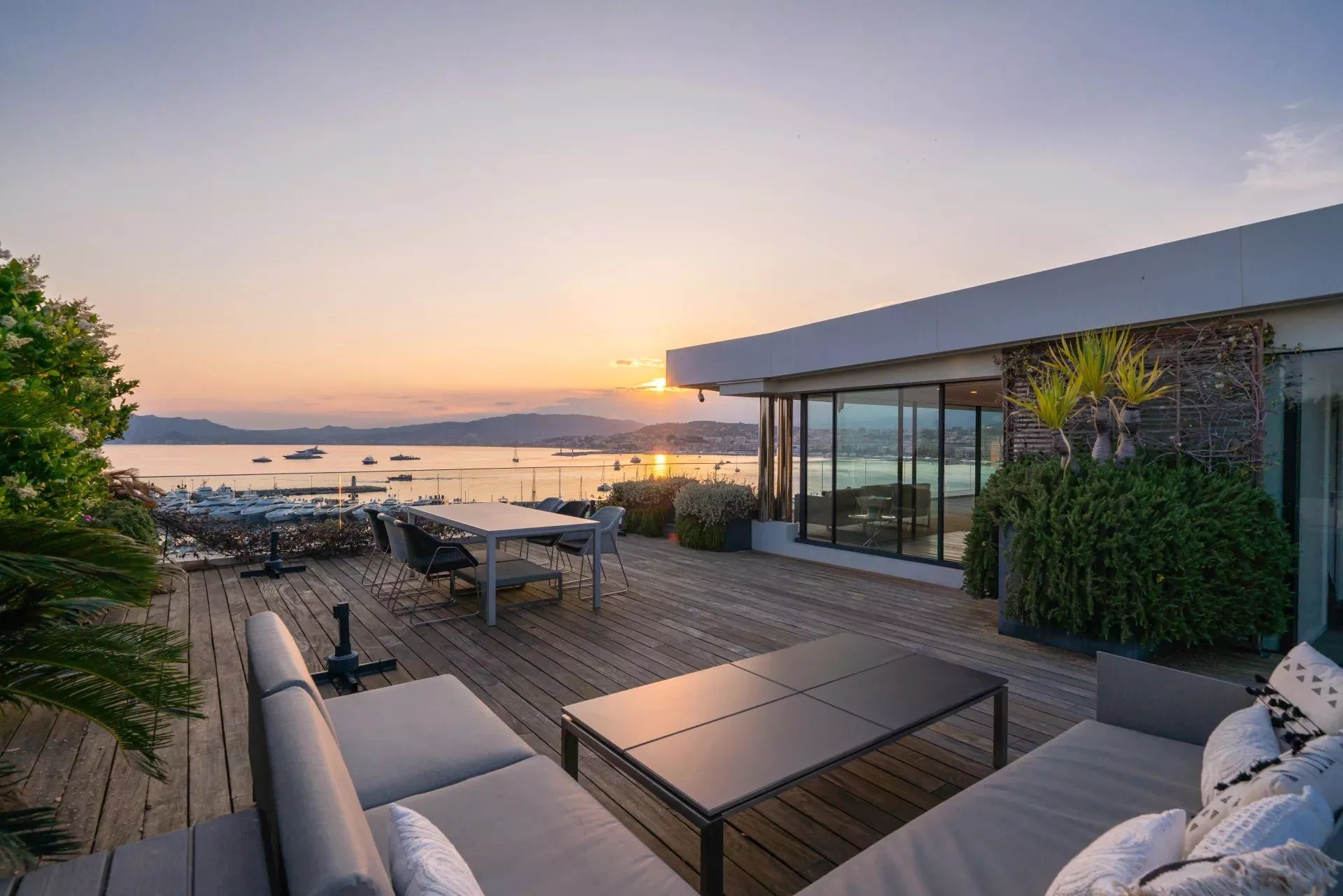
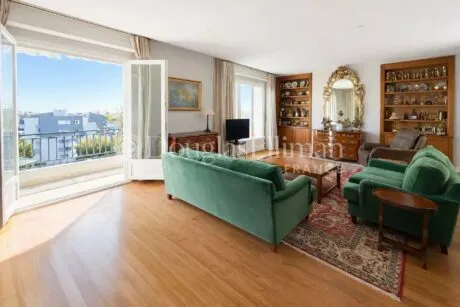
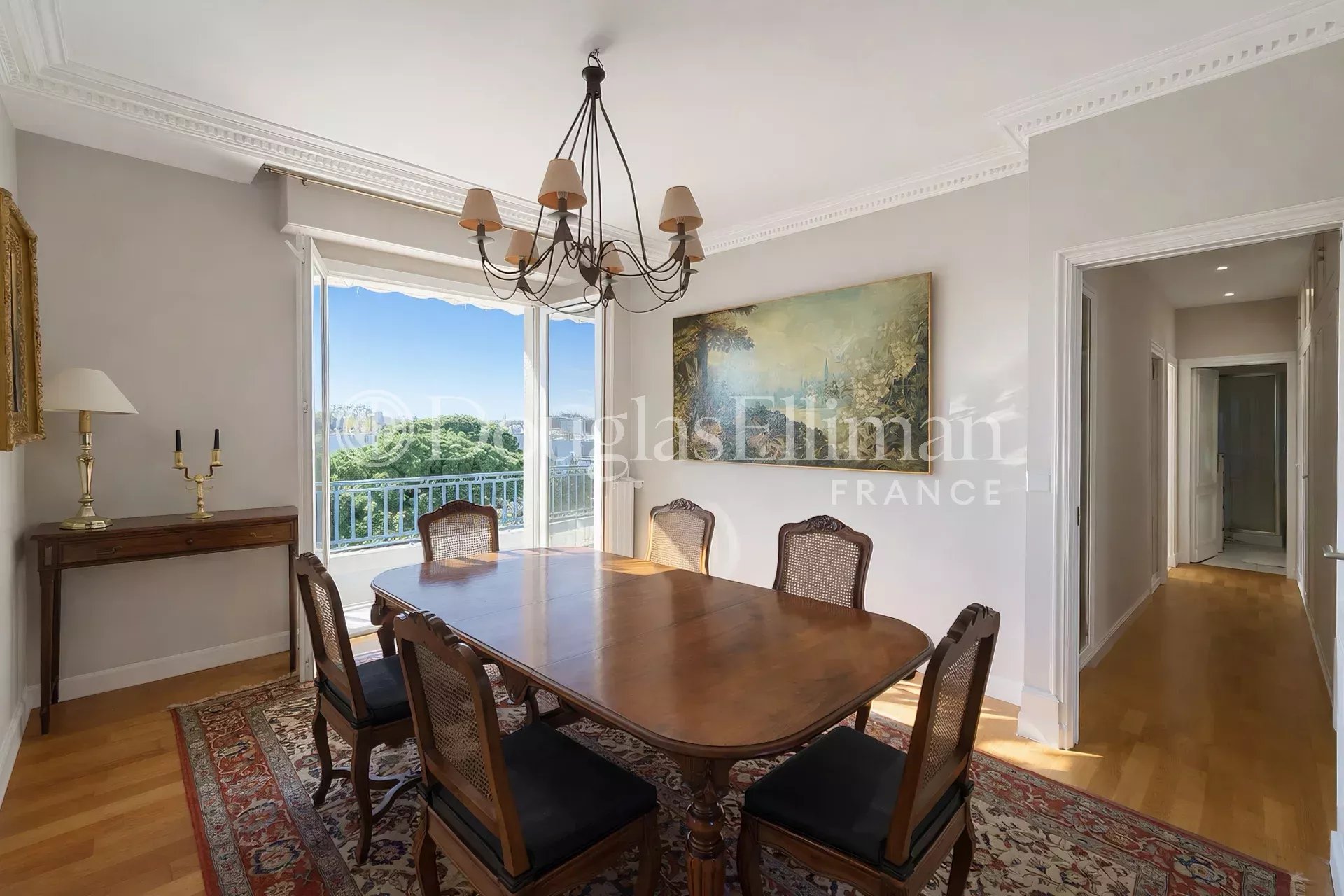
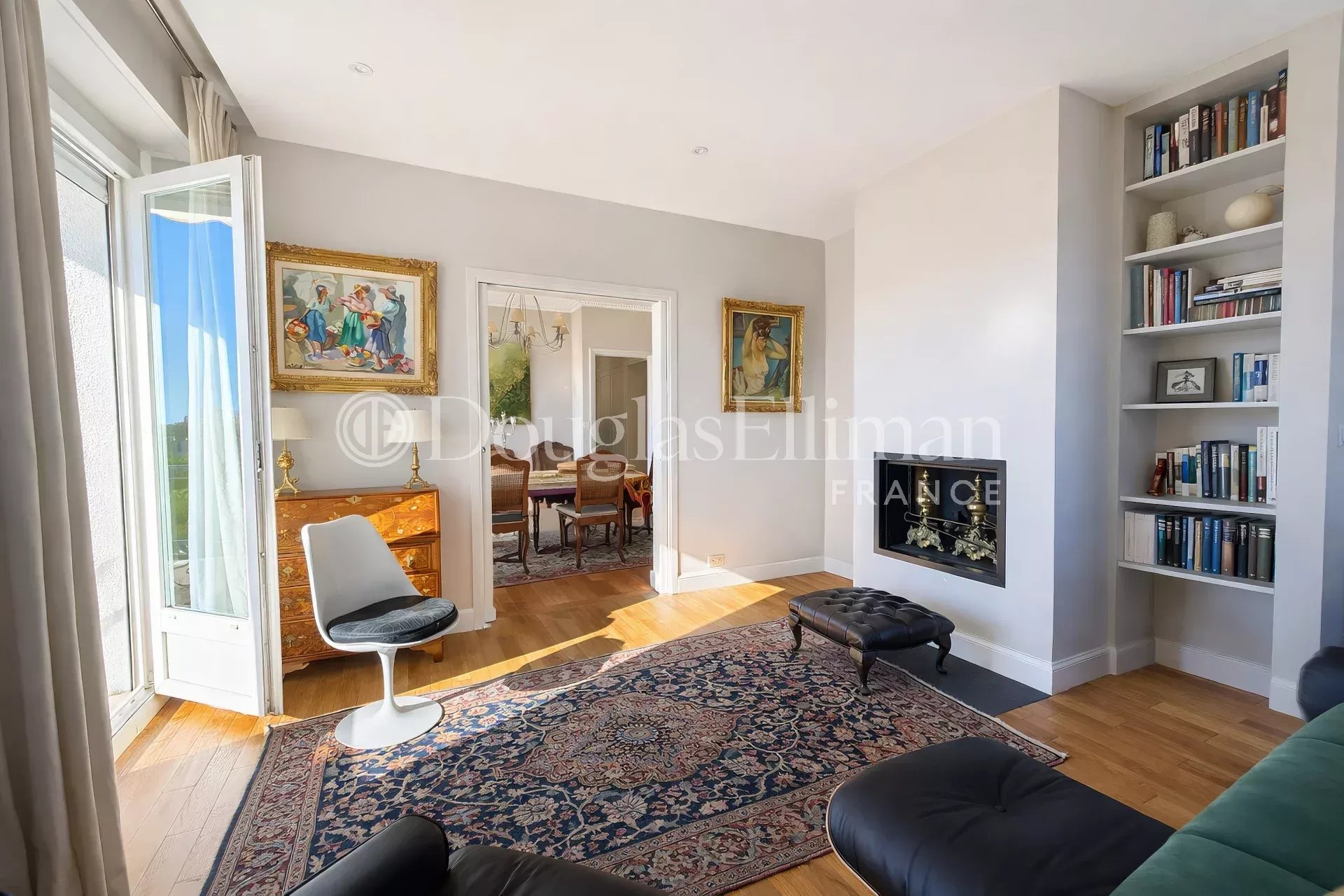
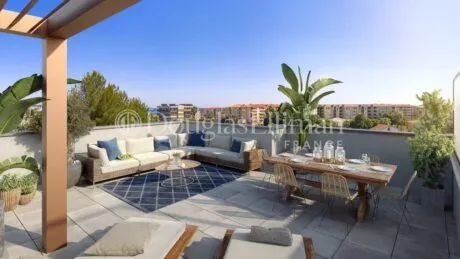
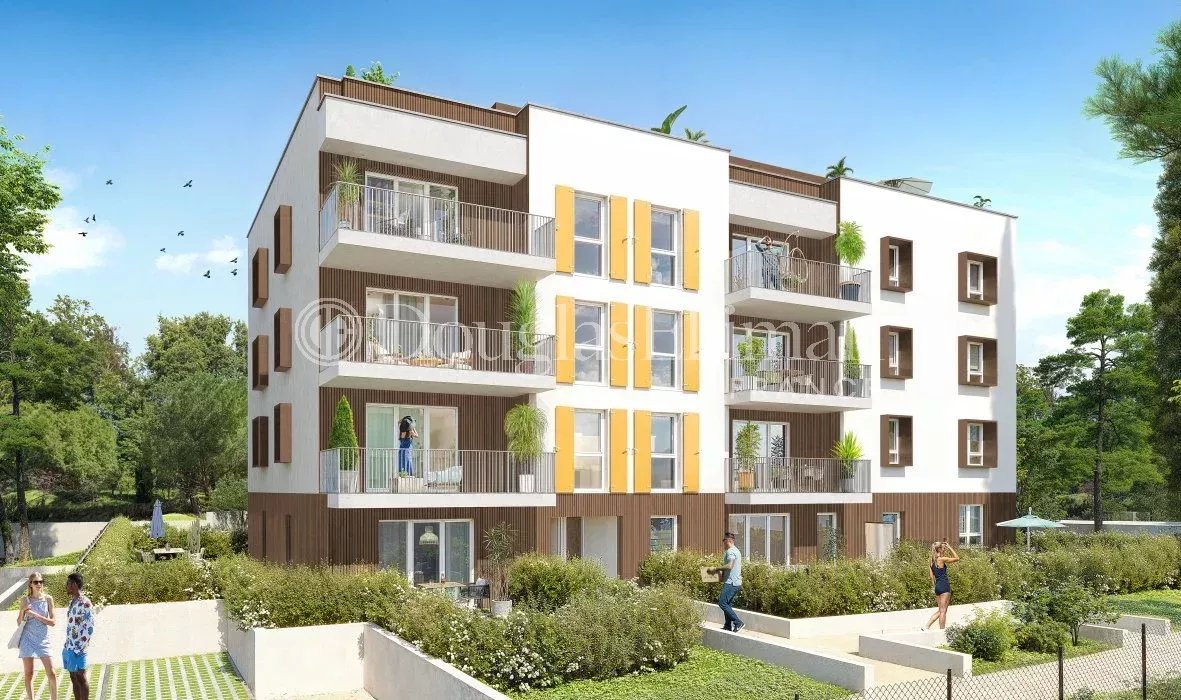
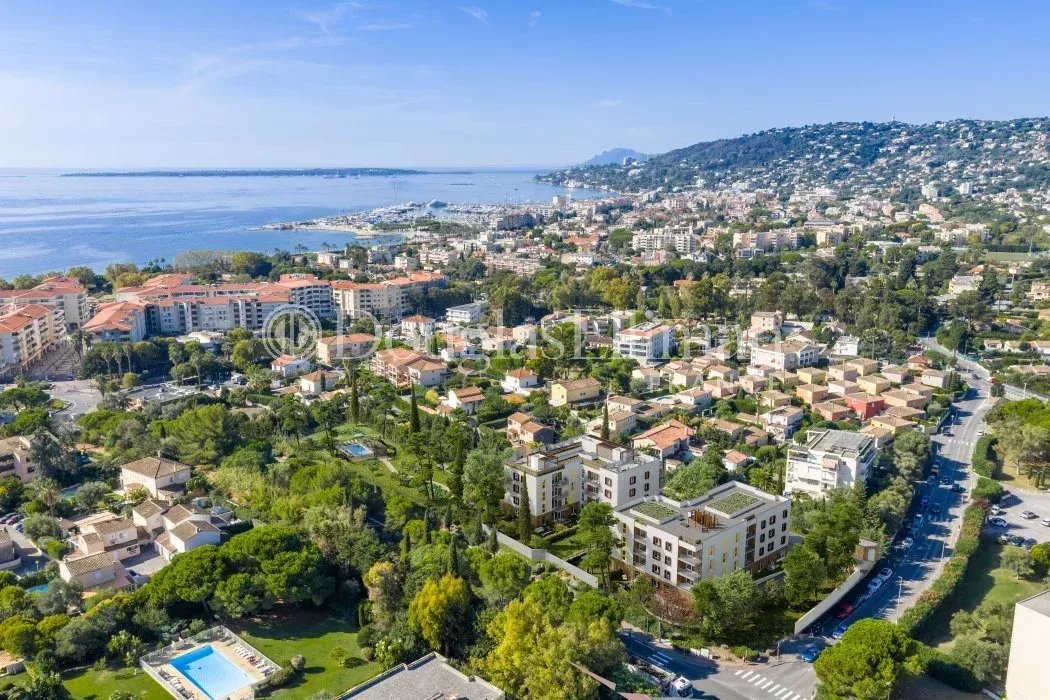
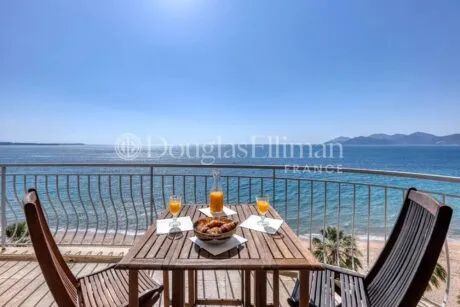
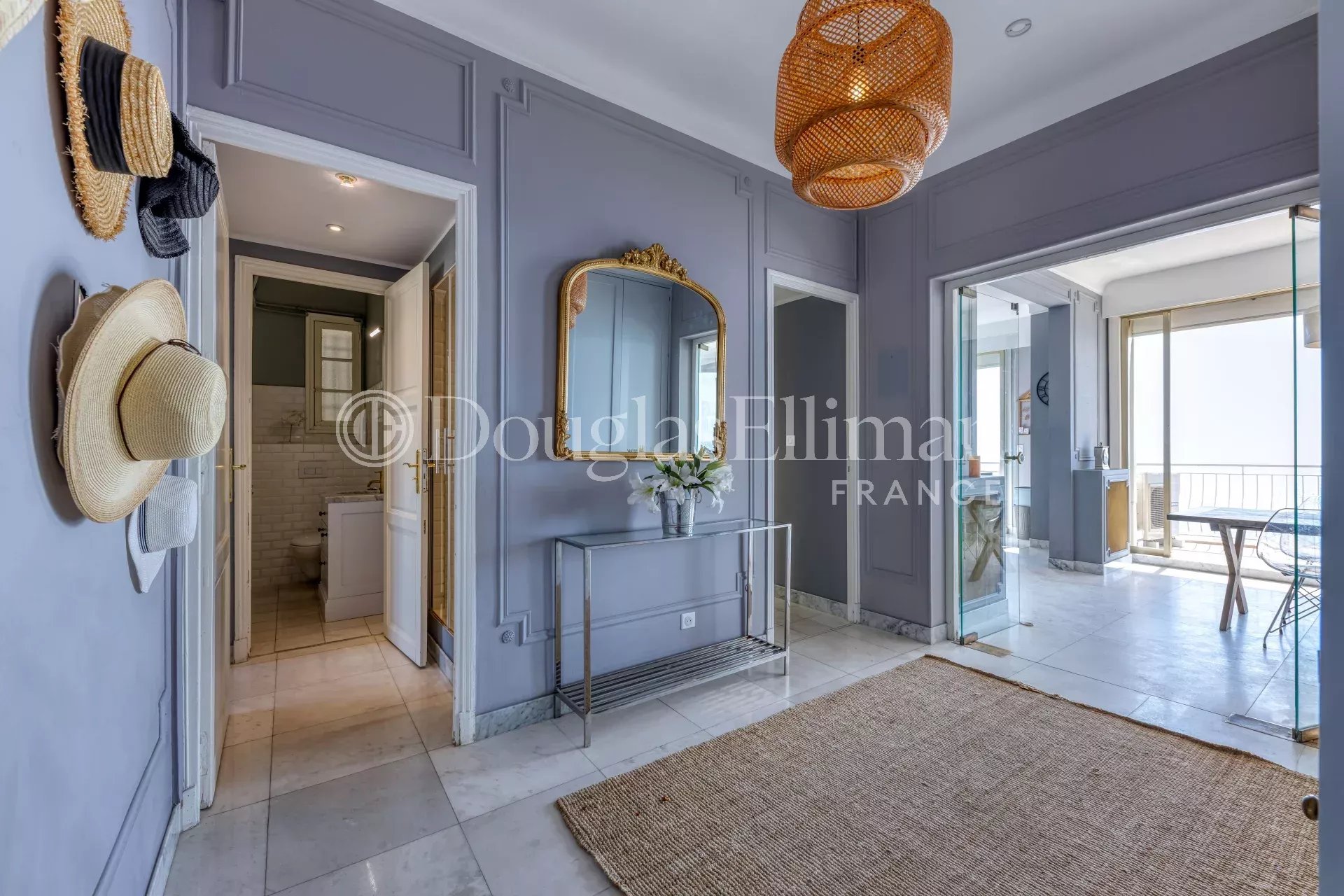
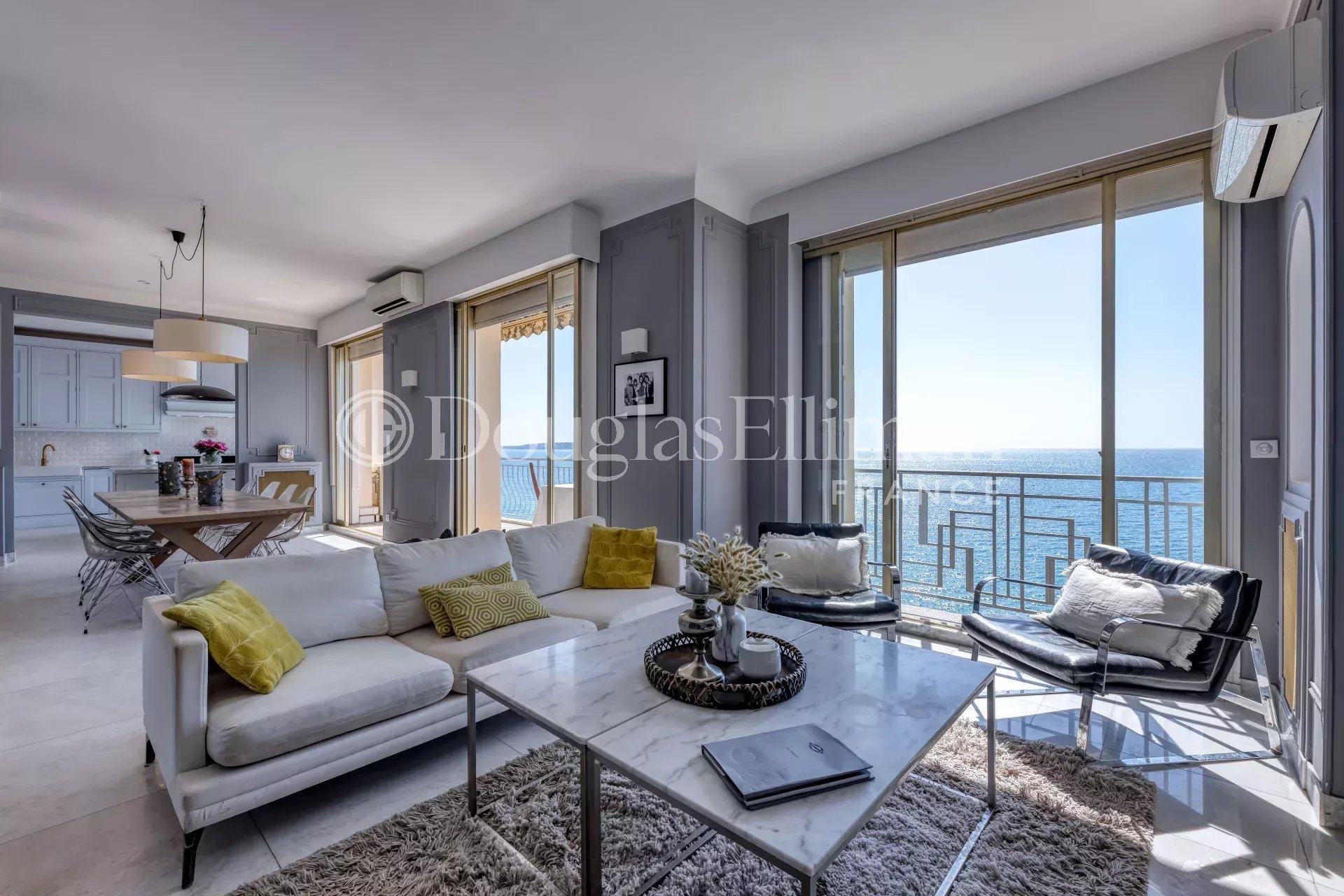
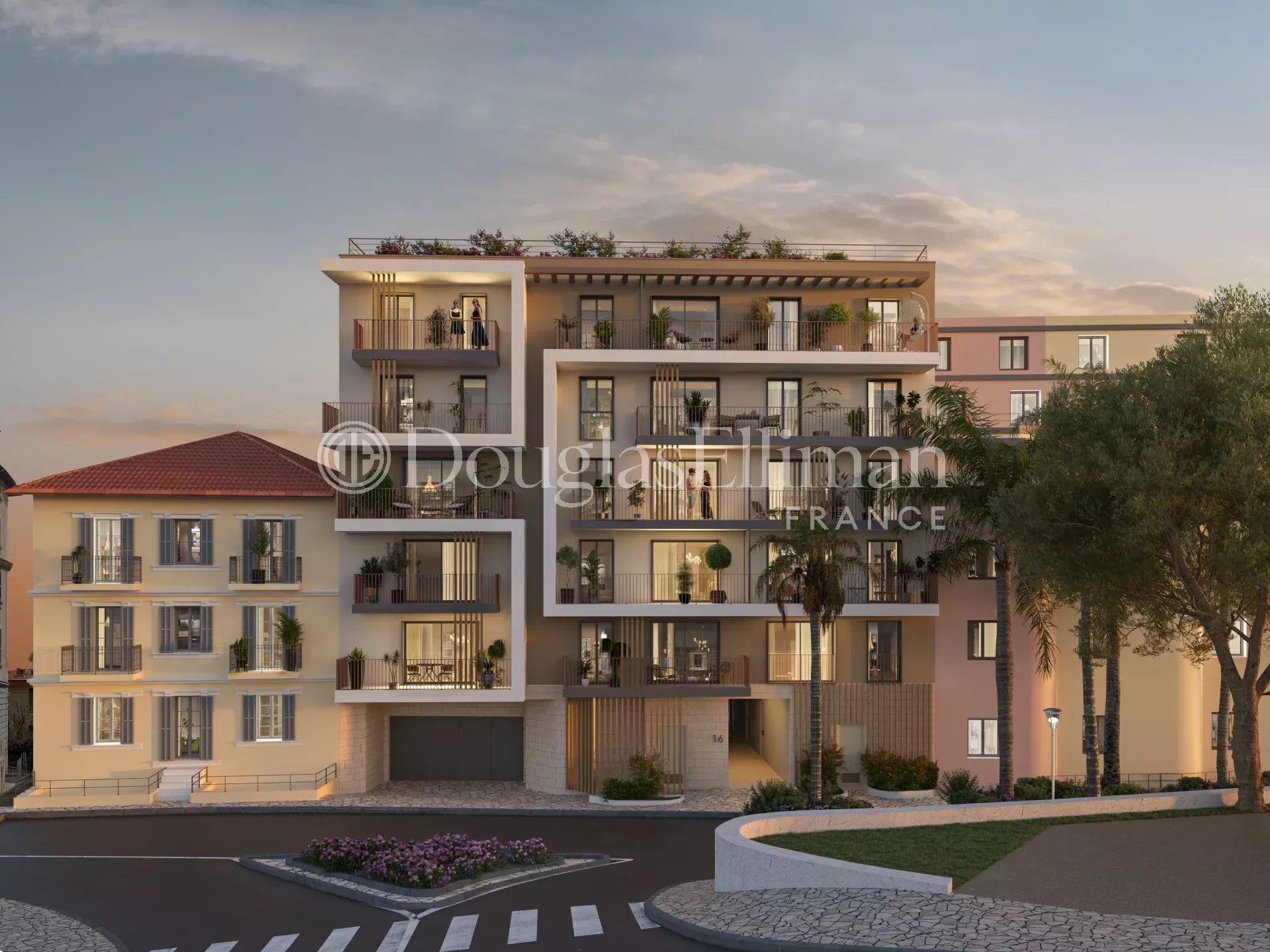
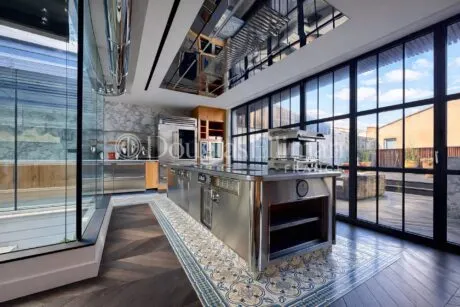
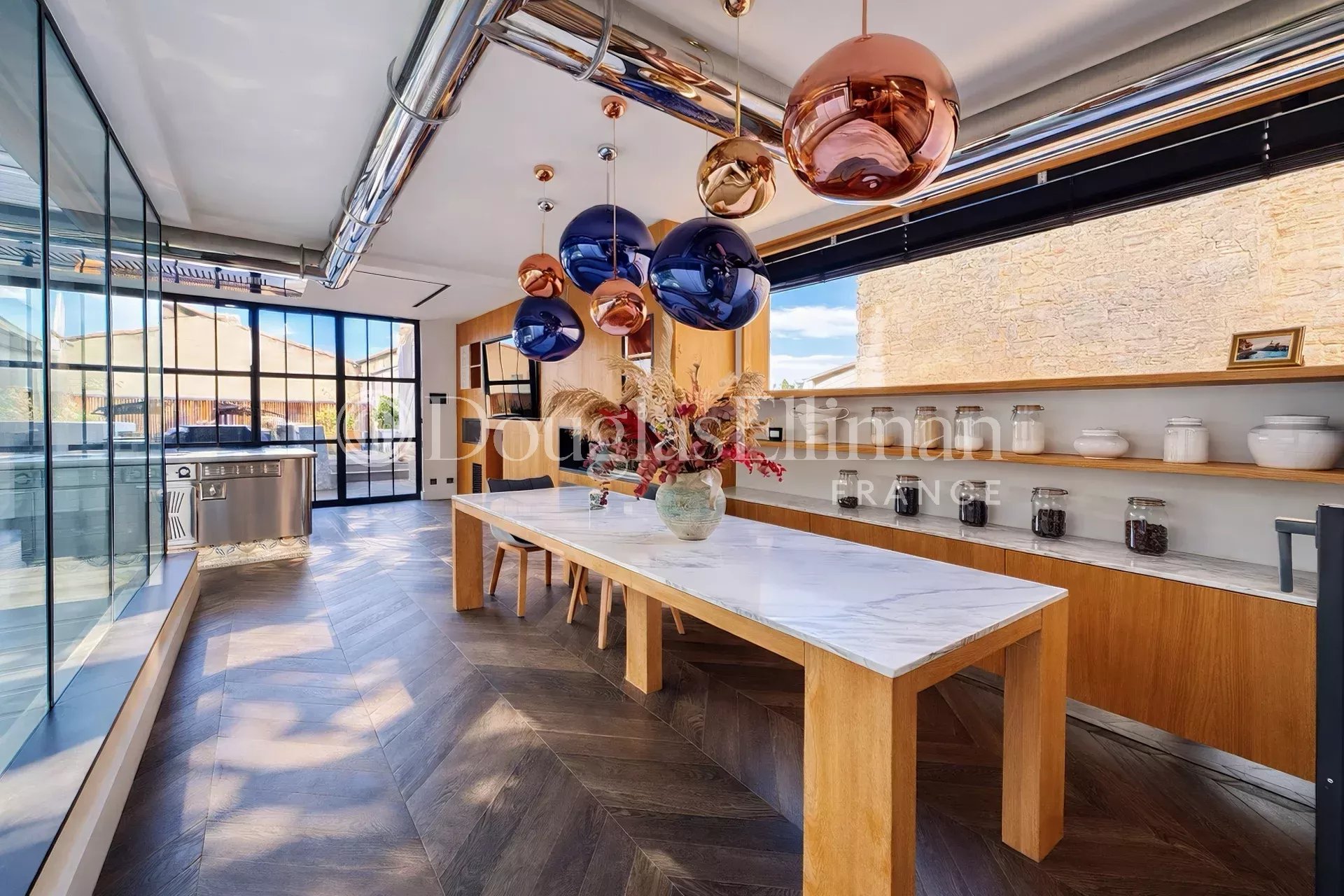
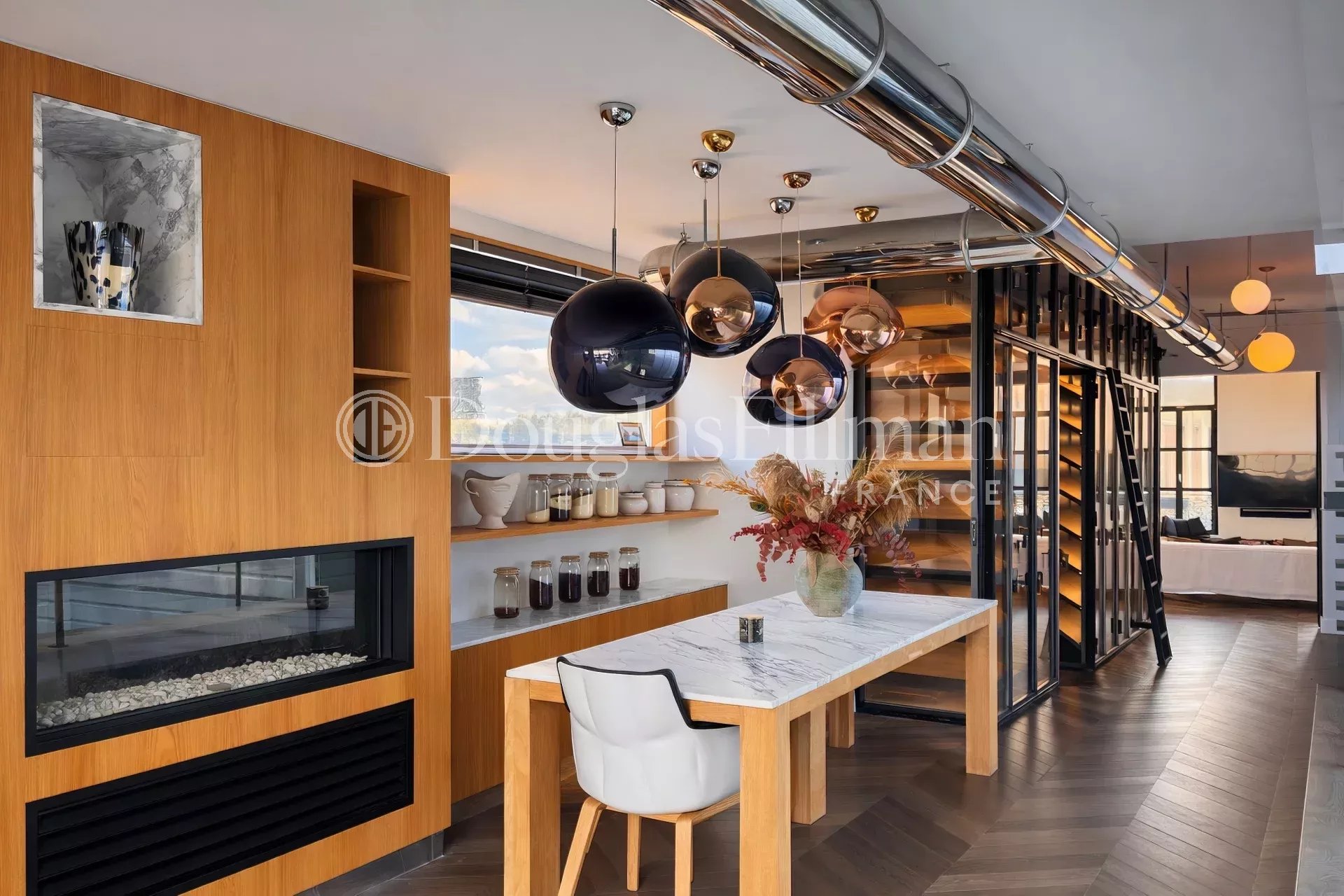
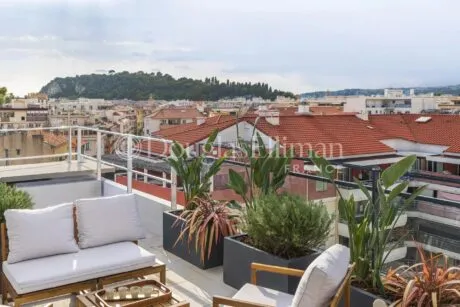
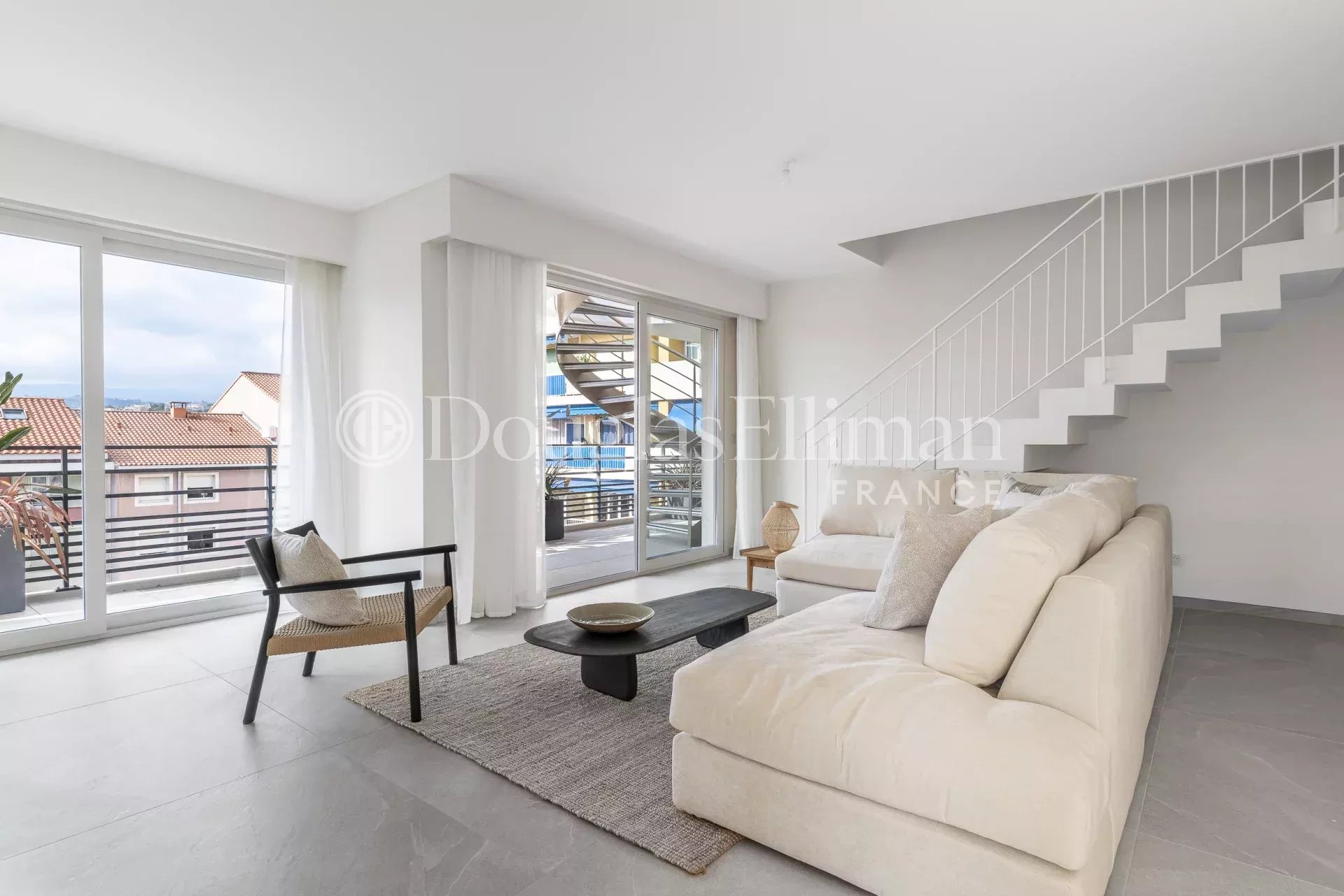
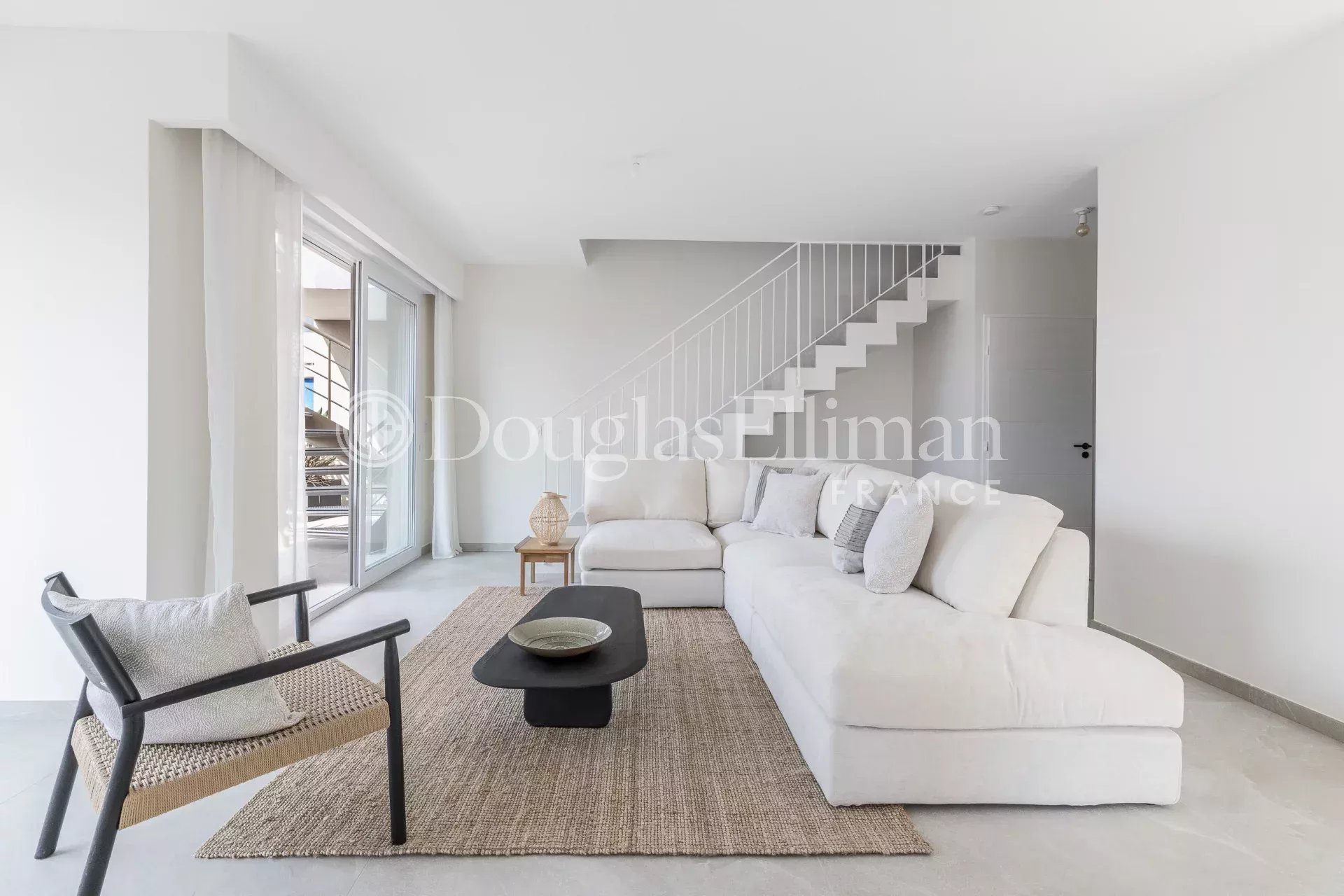
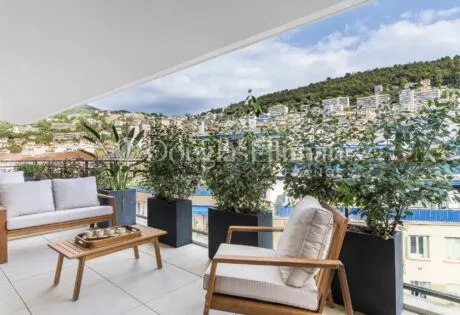
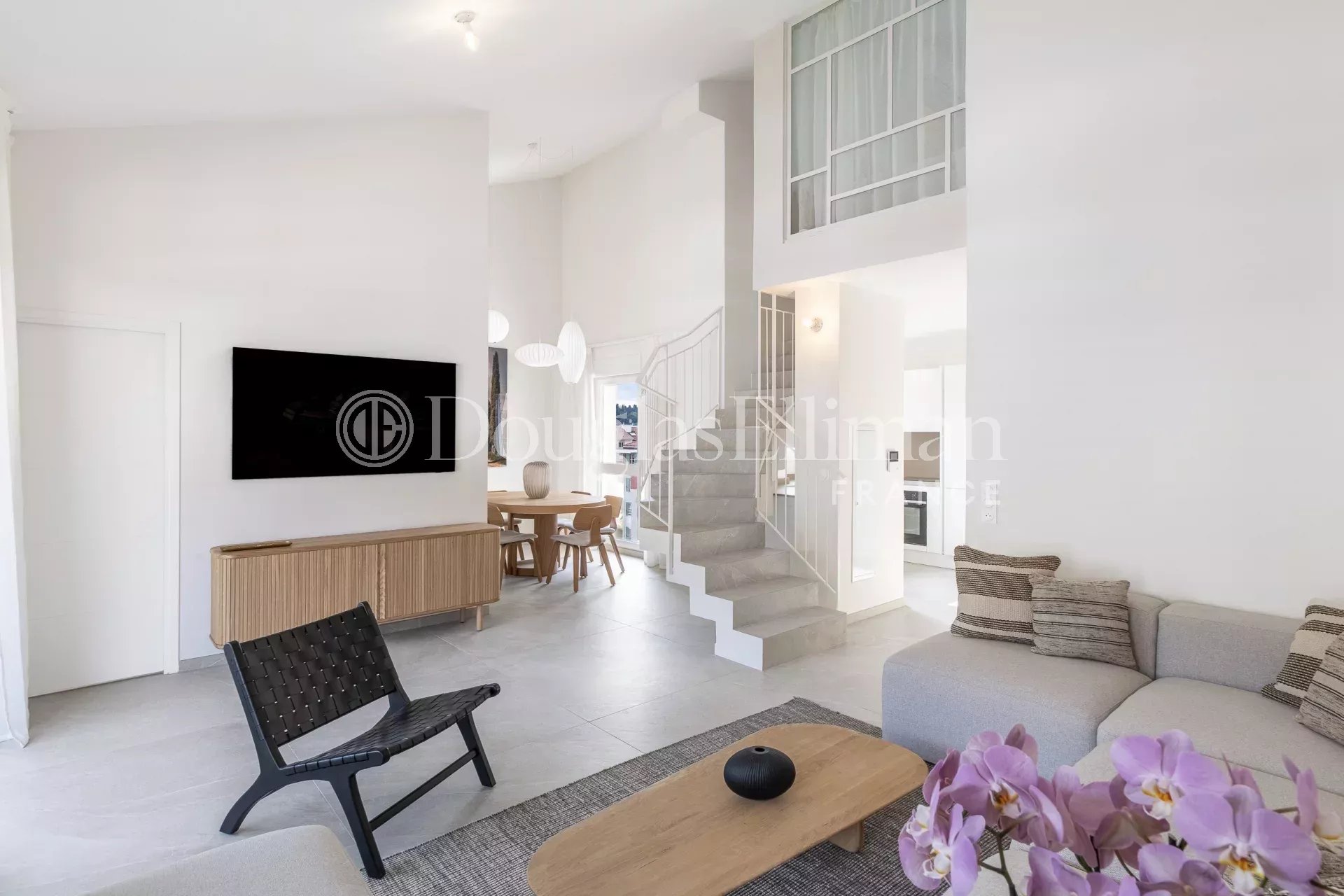
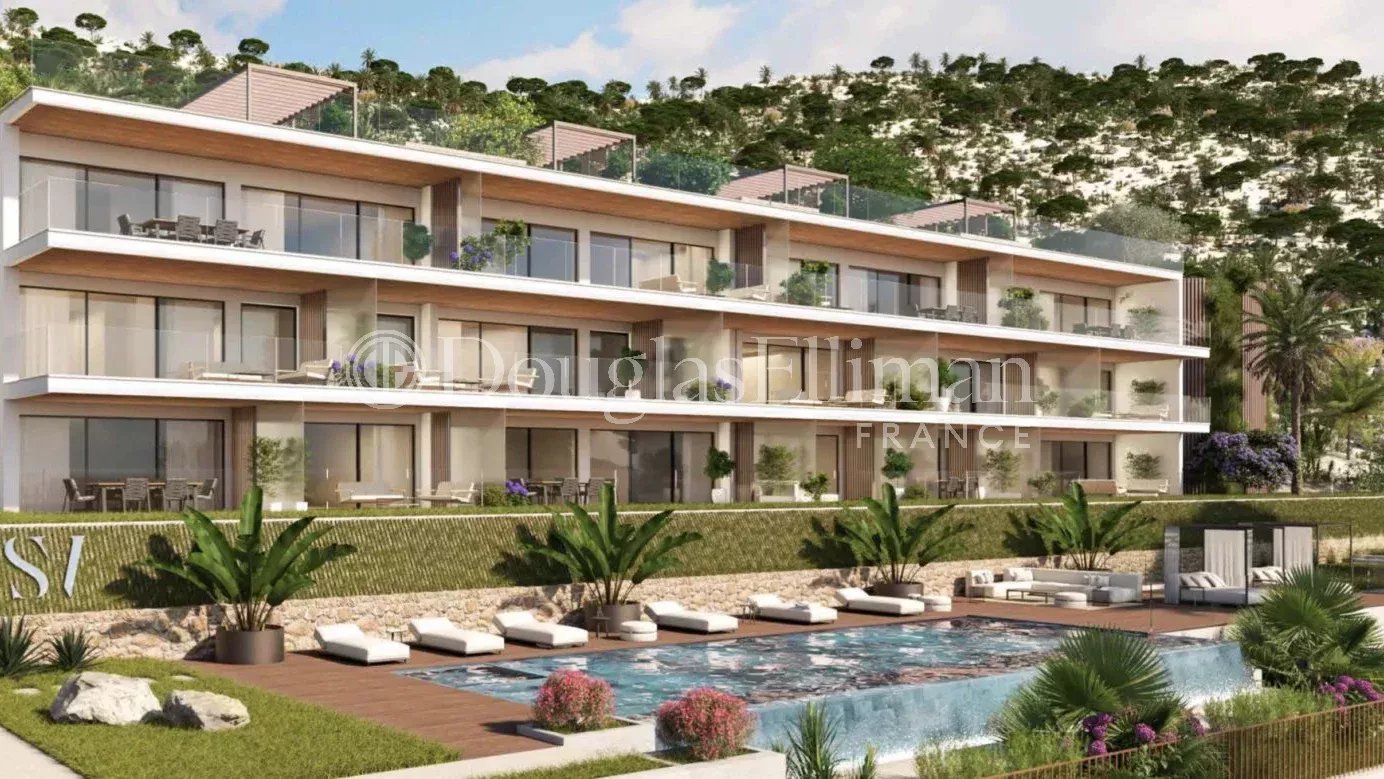
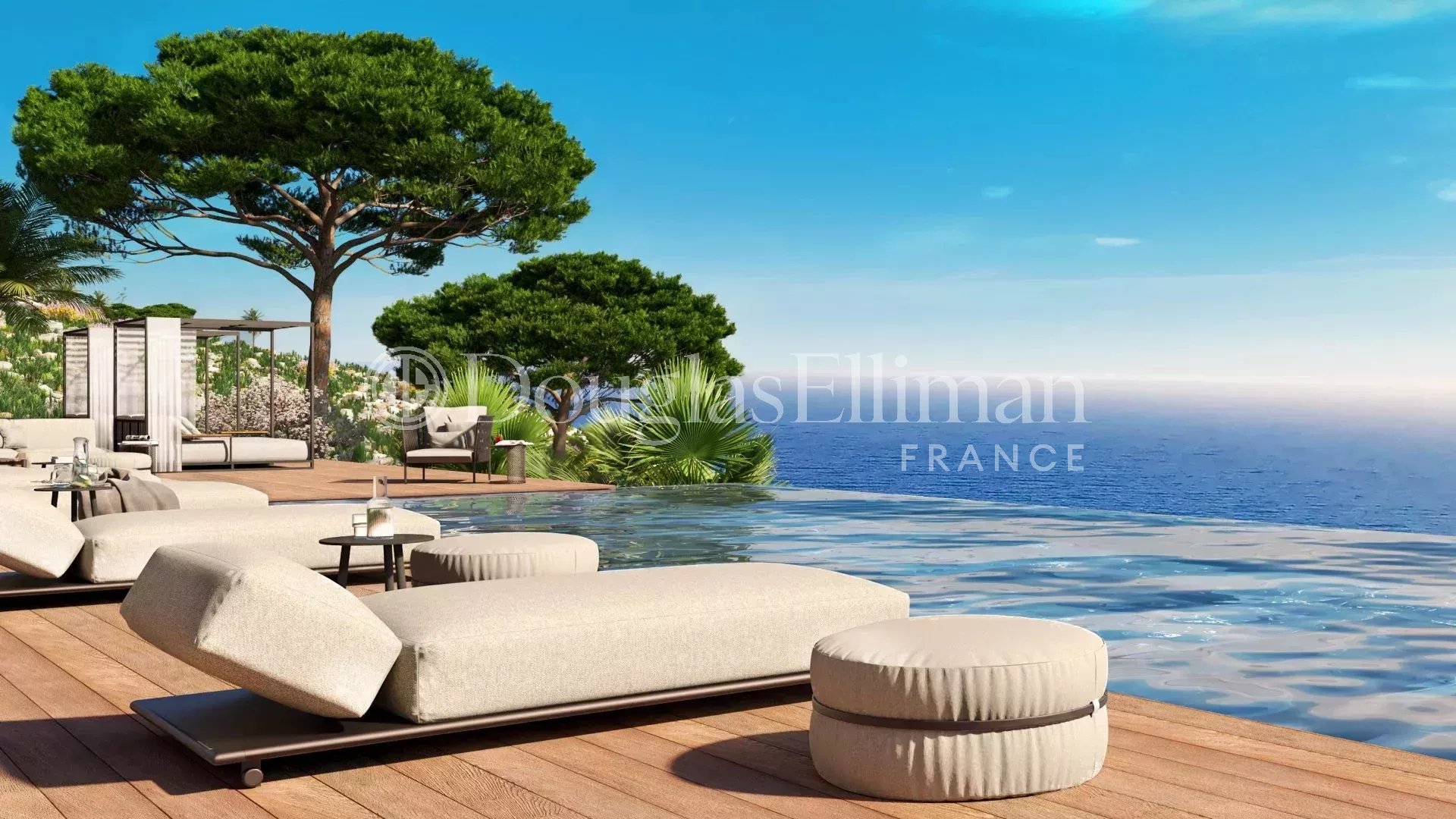
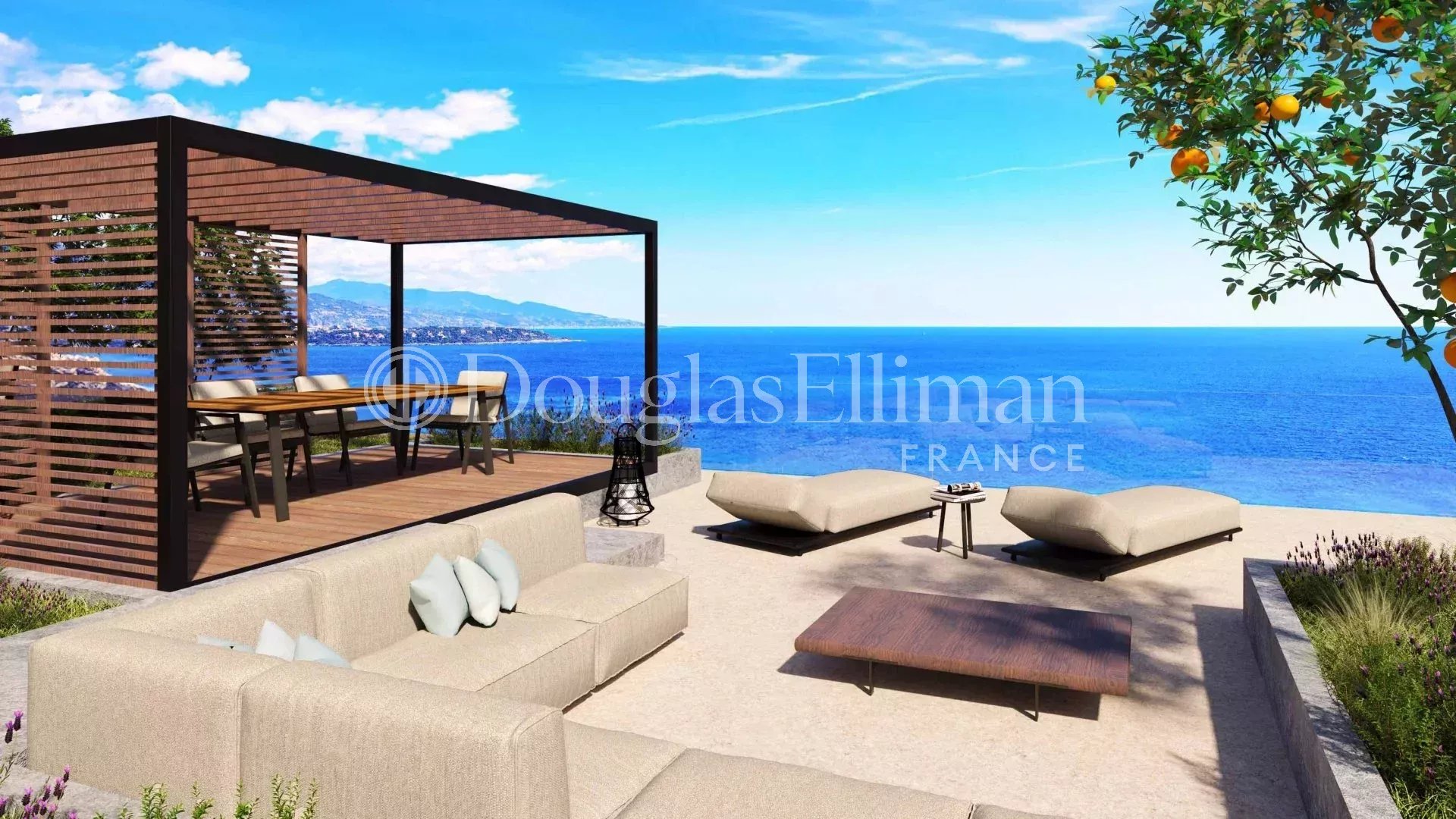
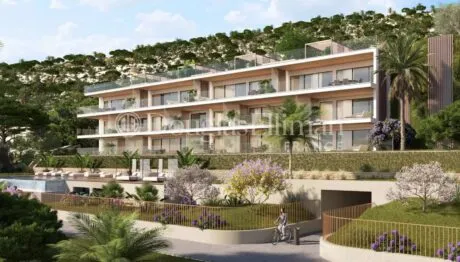
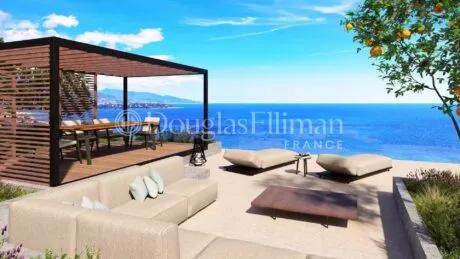
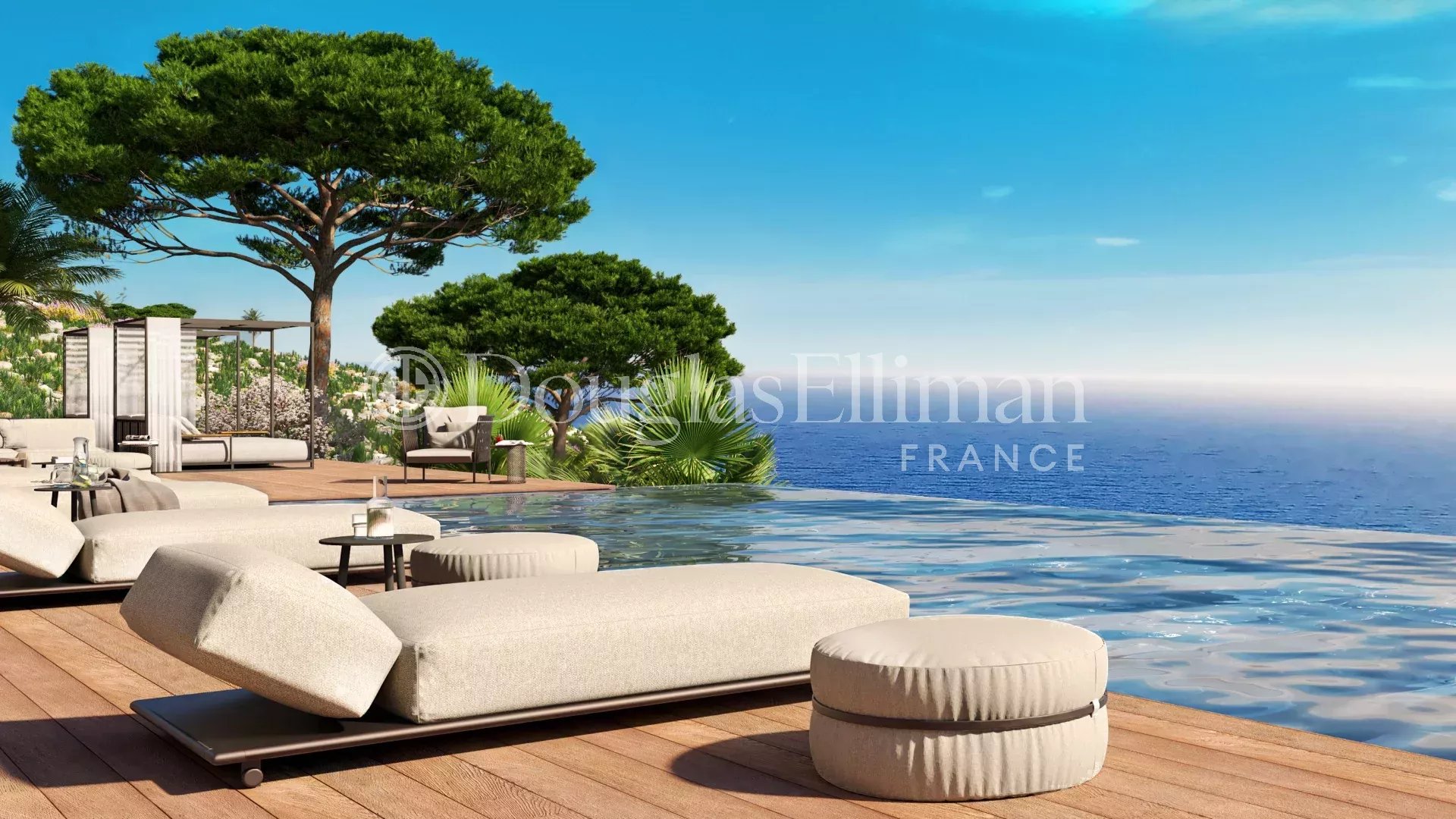
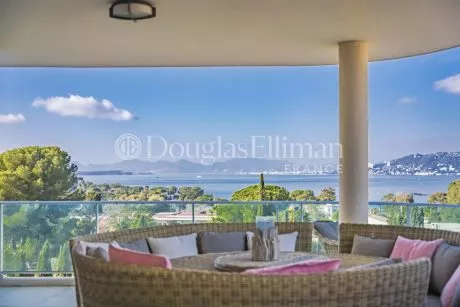
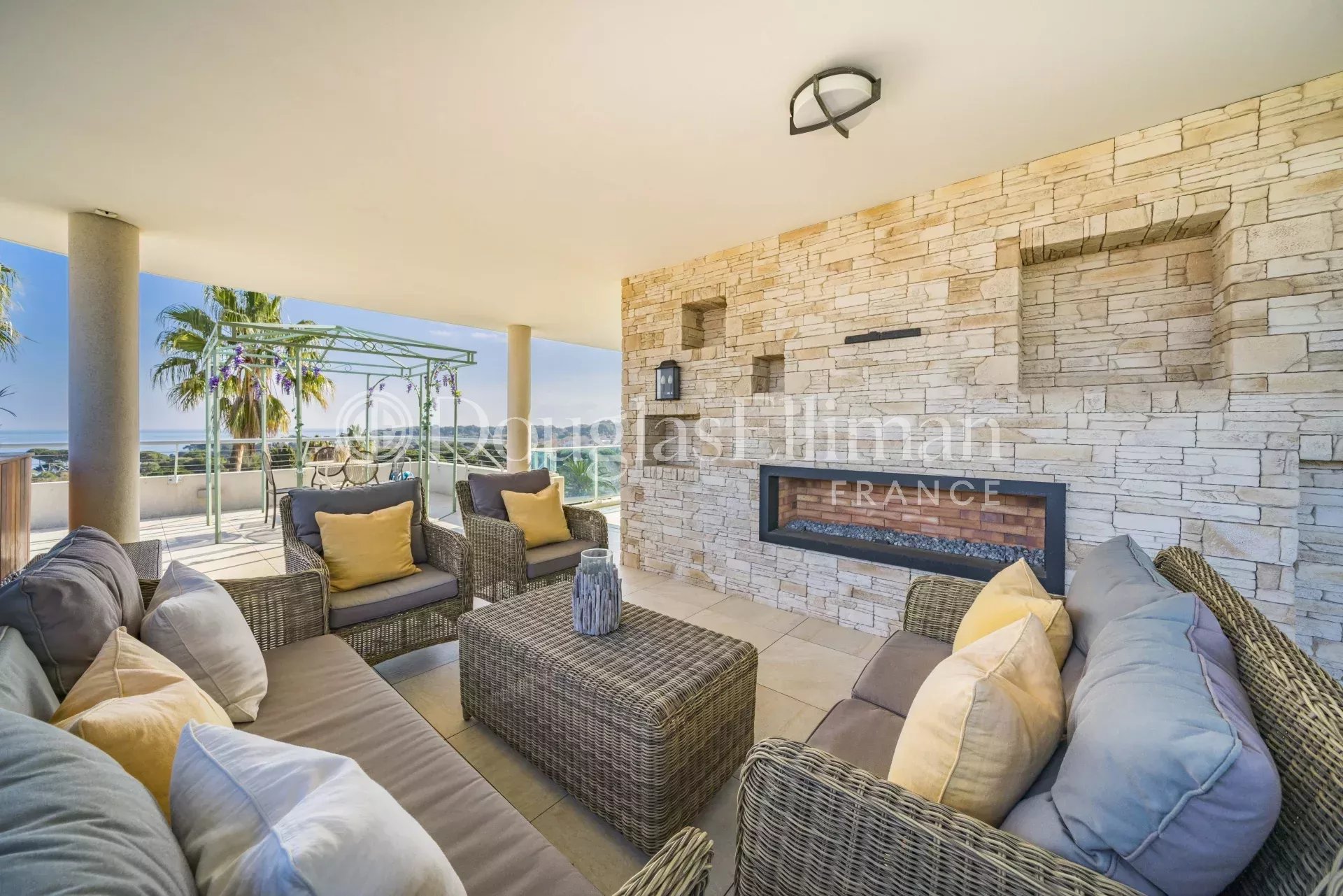
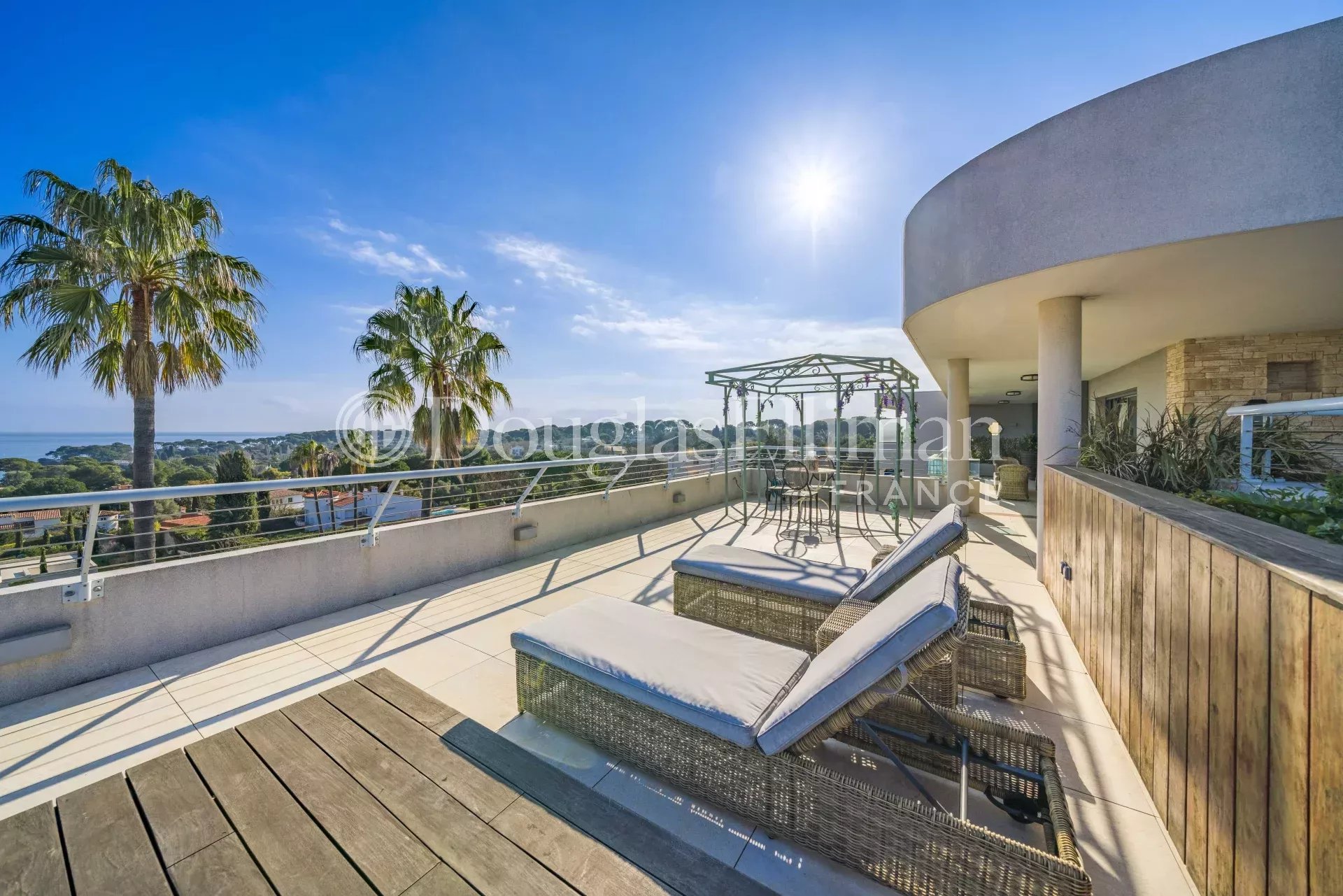
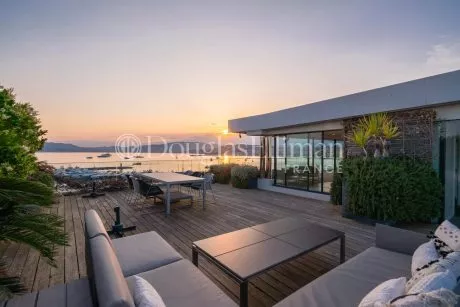
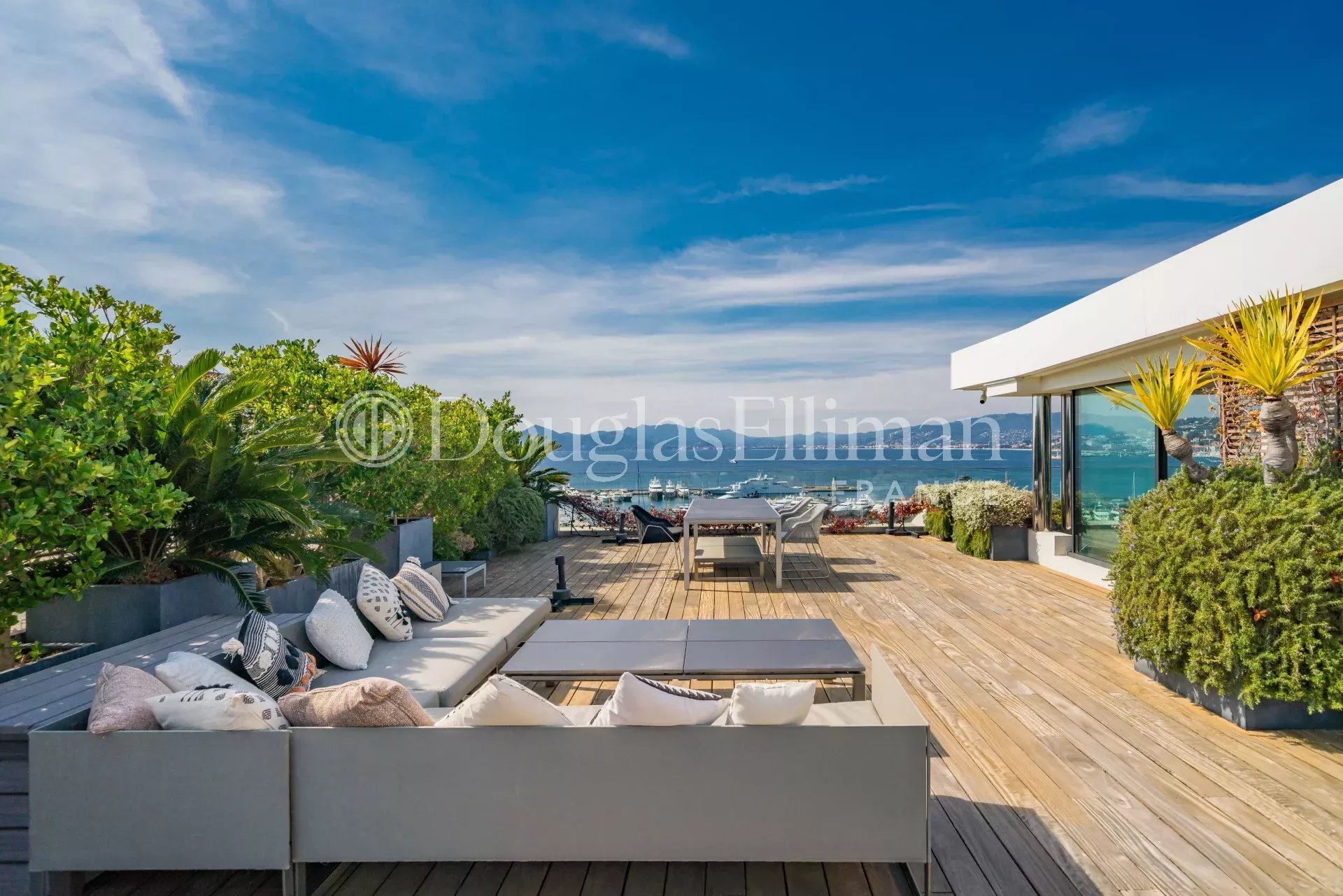
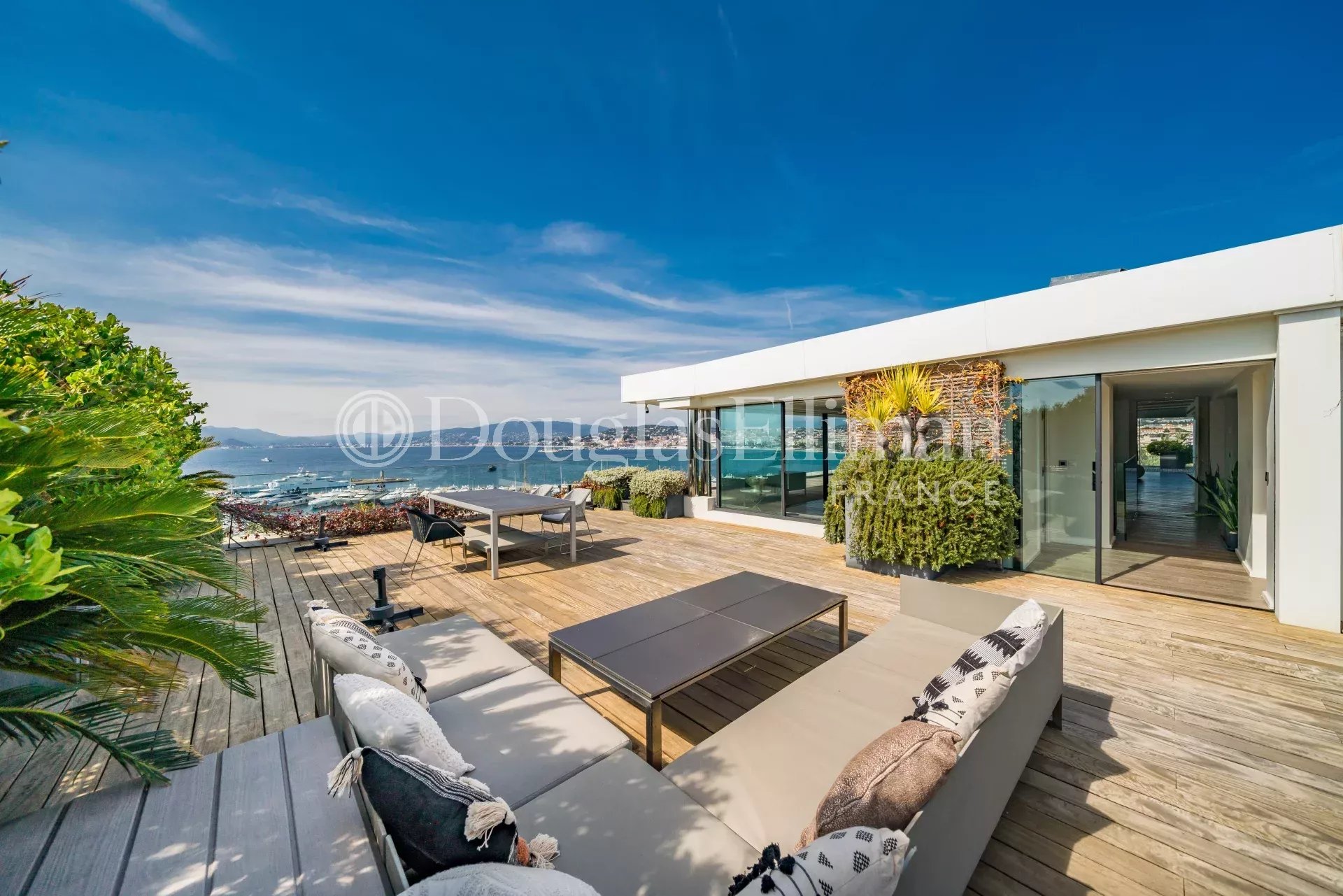
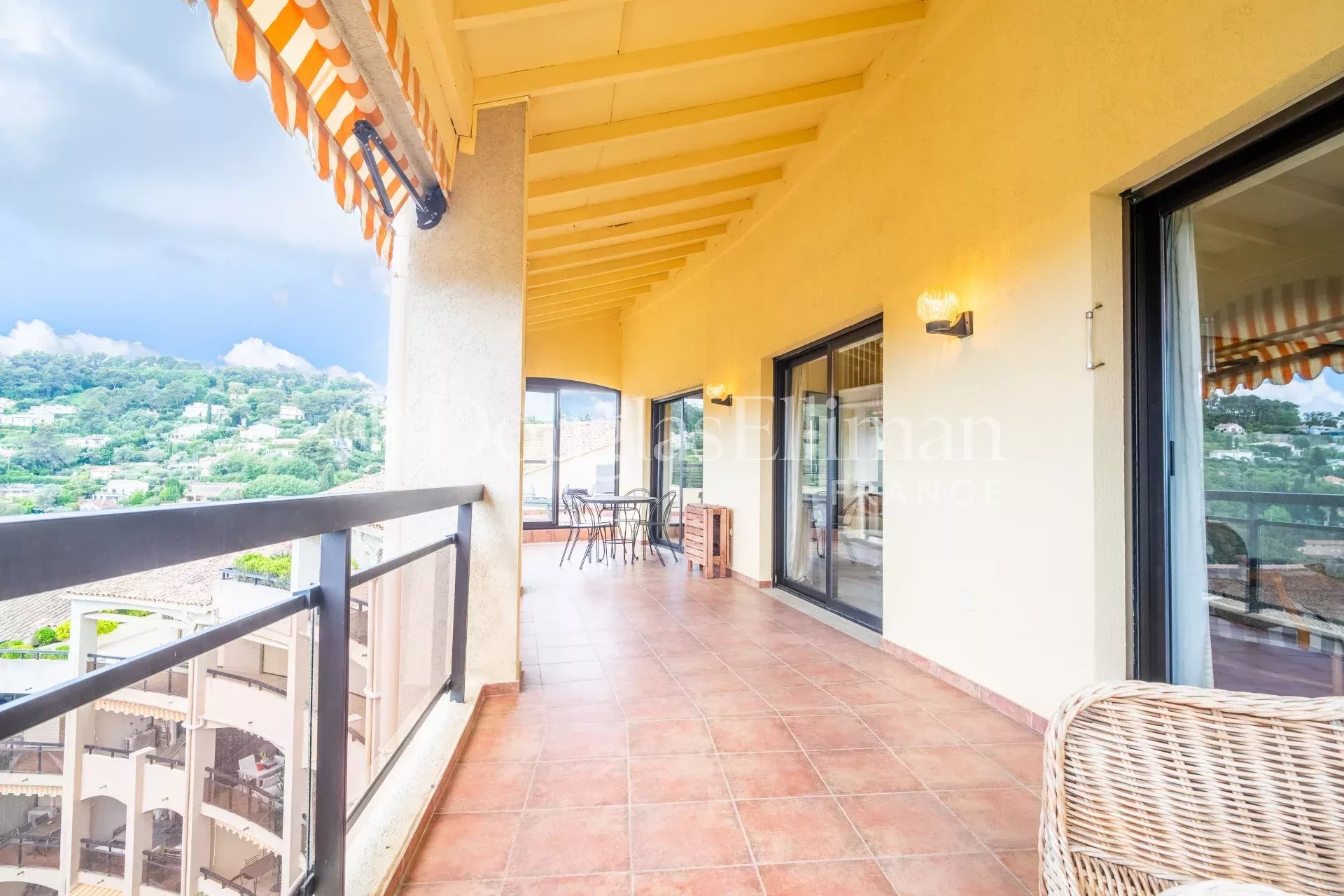
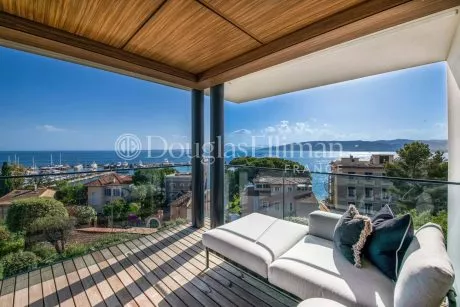
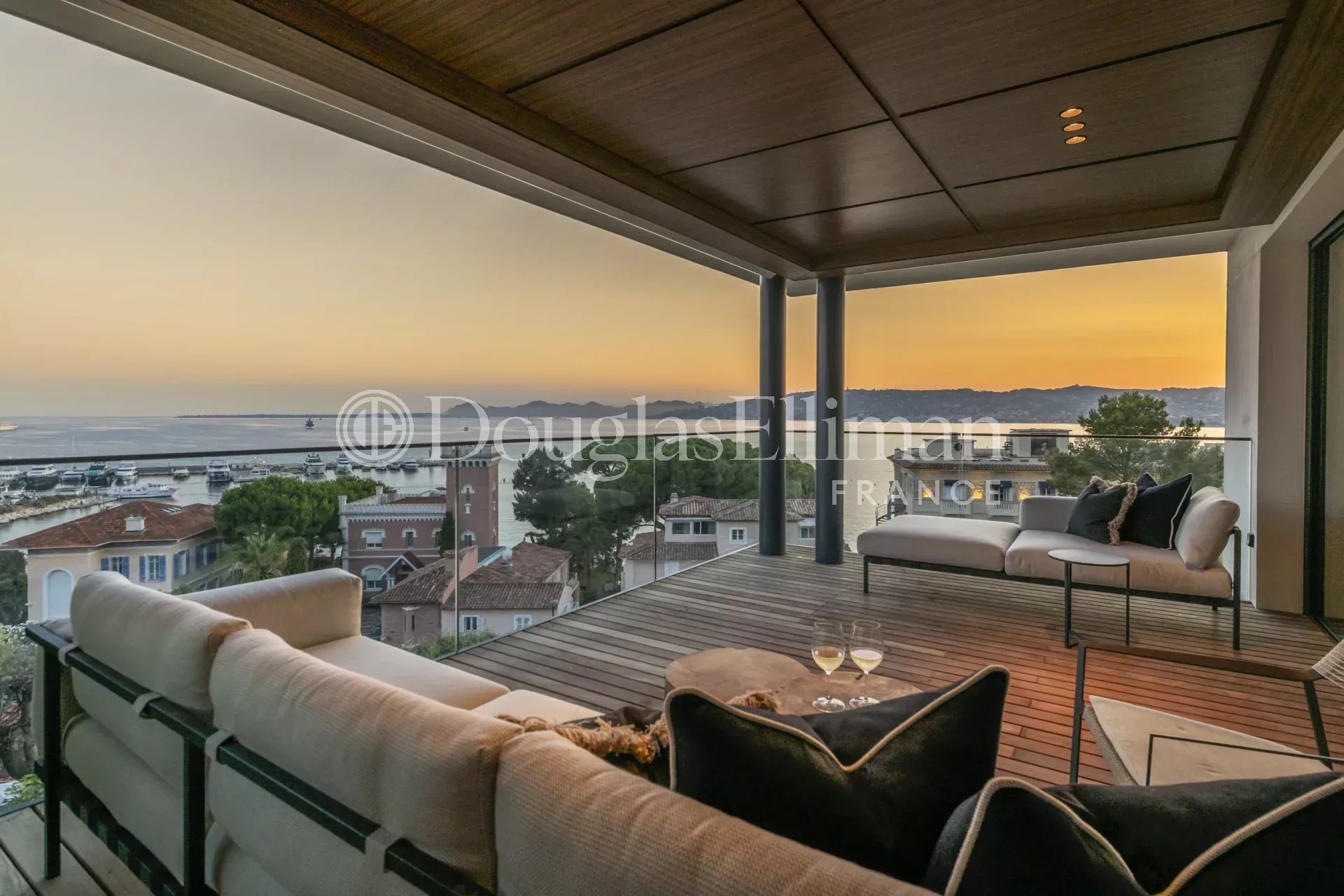
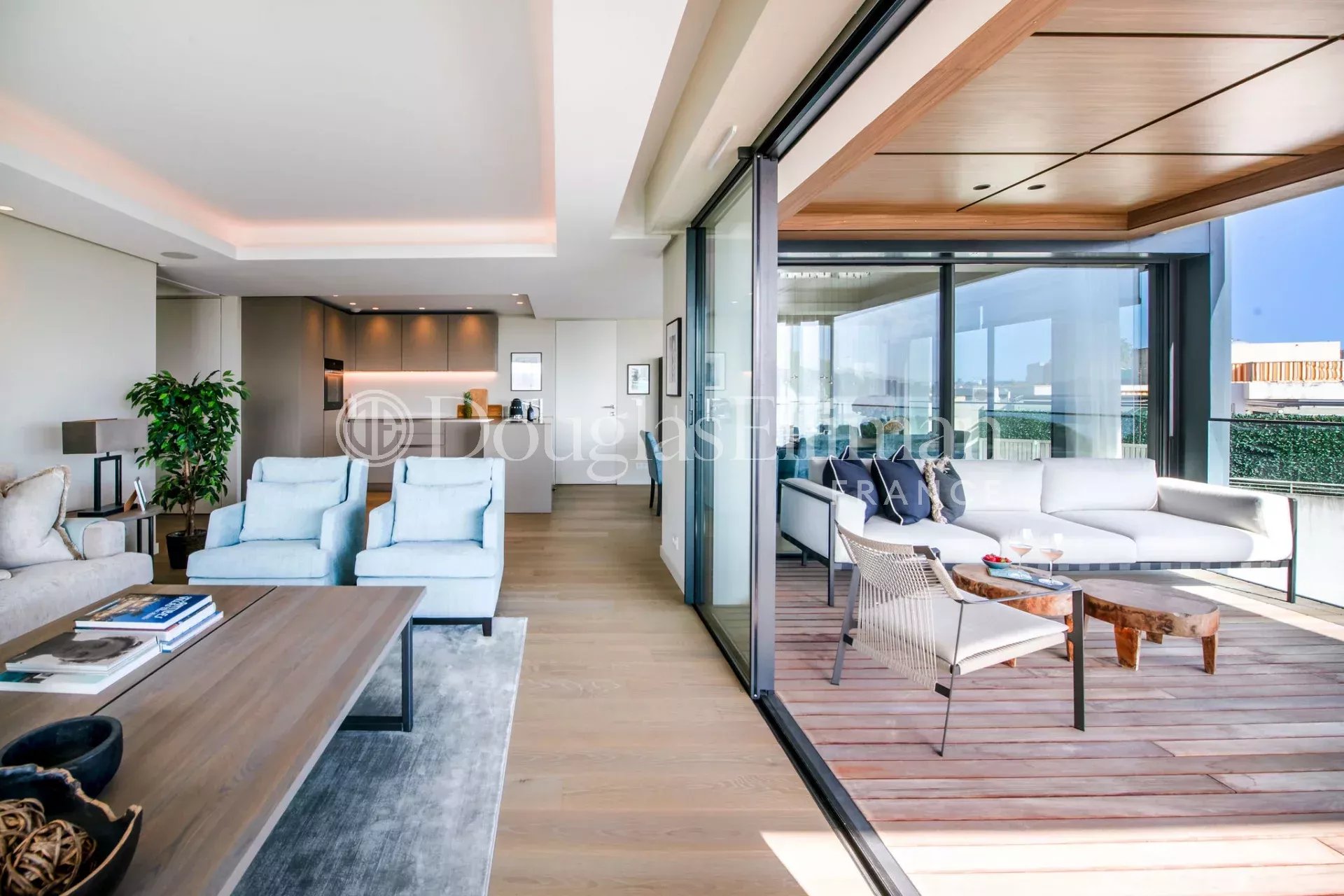
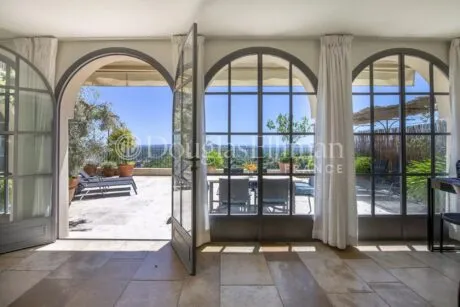
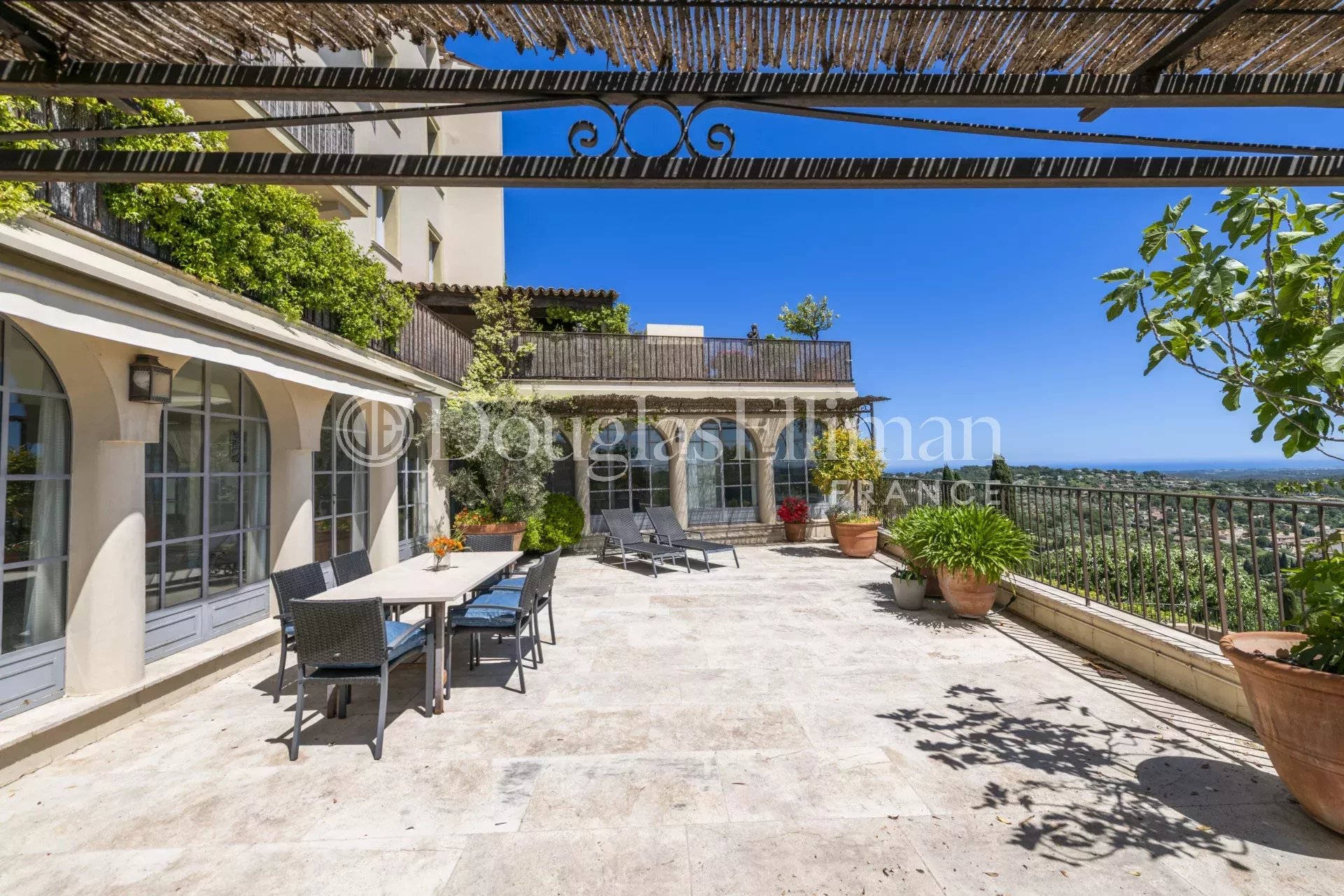
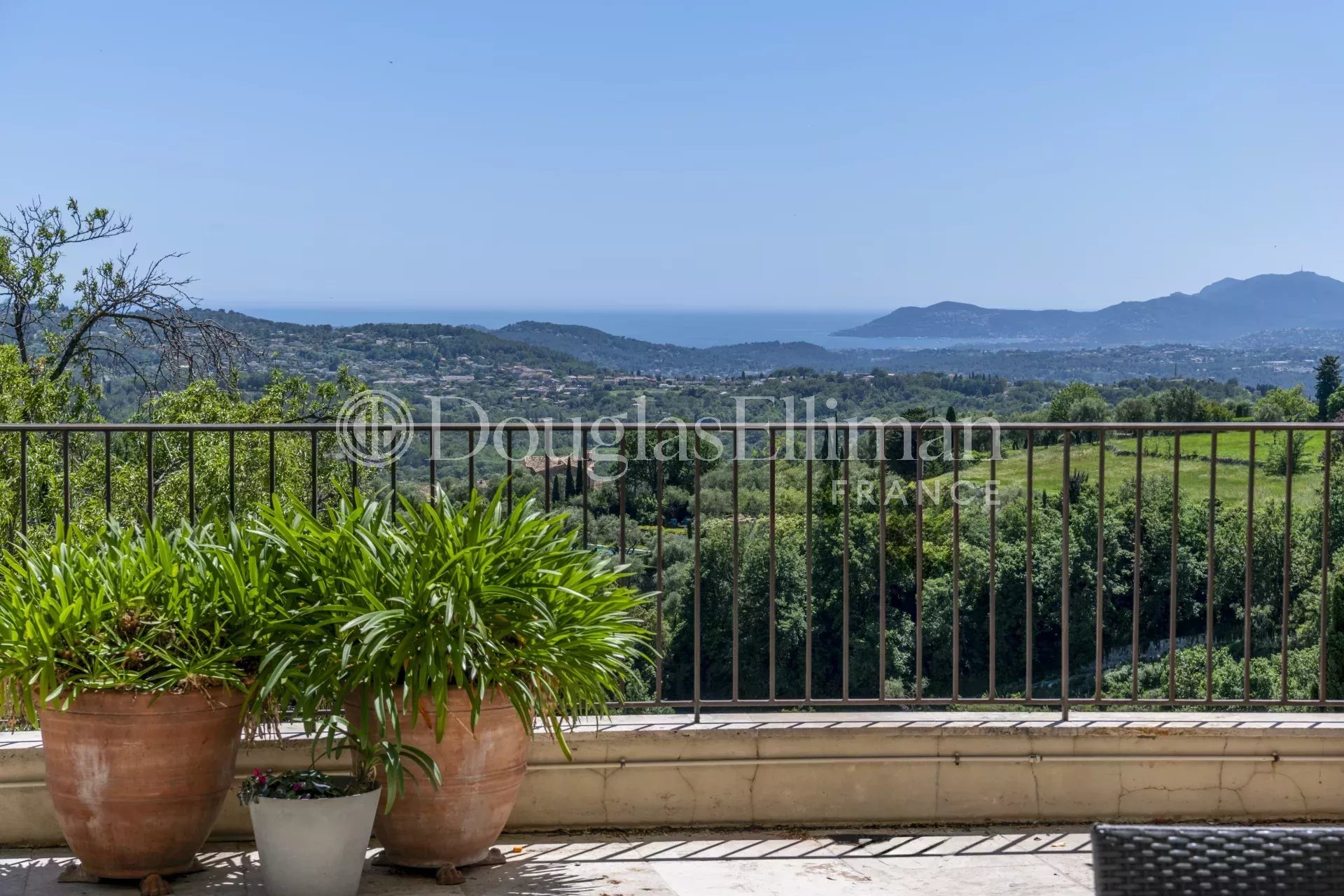
Since New York in the 1920s, the penthouse has embodied a distinctive synthesis of urban living. These rooftop apartments were long confined to the technical top floors of buildings. Over the past two decades, they have become the most sought-after assets on the luxury property market. On the Côte d’Azur, where the natural topography amplifies the vistas, properties offer a distinctly French take on the “penthouse”: combining architectural altitude with maritime panoramas.
At Douglas Elliman France, we naturally accompany this market evolution. Our expertise allows us to distinguish true penthouses—with their private terraces, dedicated access, and exclusive features—from simple top-floor apartments rebranded by marketing to appeal to an uninitiated clientele.
Architectural Typologies: From Duplex to Sky Villa
The term “penthouse” actually covers quite distinct architectural realities. Each carries different value, as they suit specific lifestyles.
The Classic Duplex Penthouse
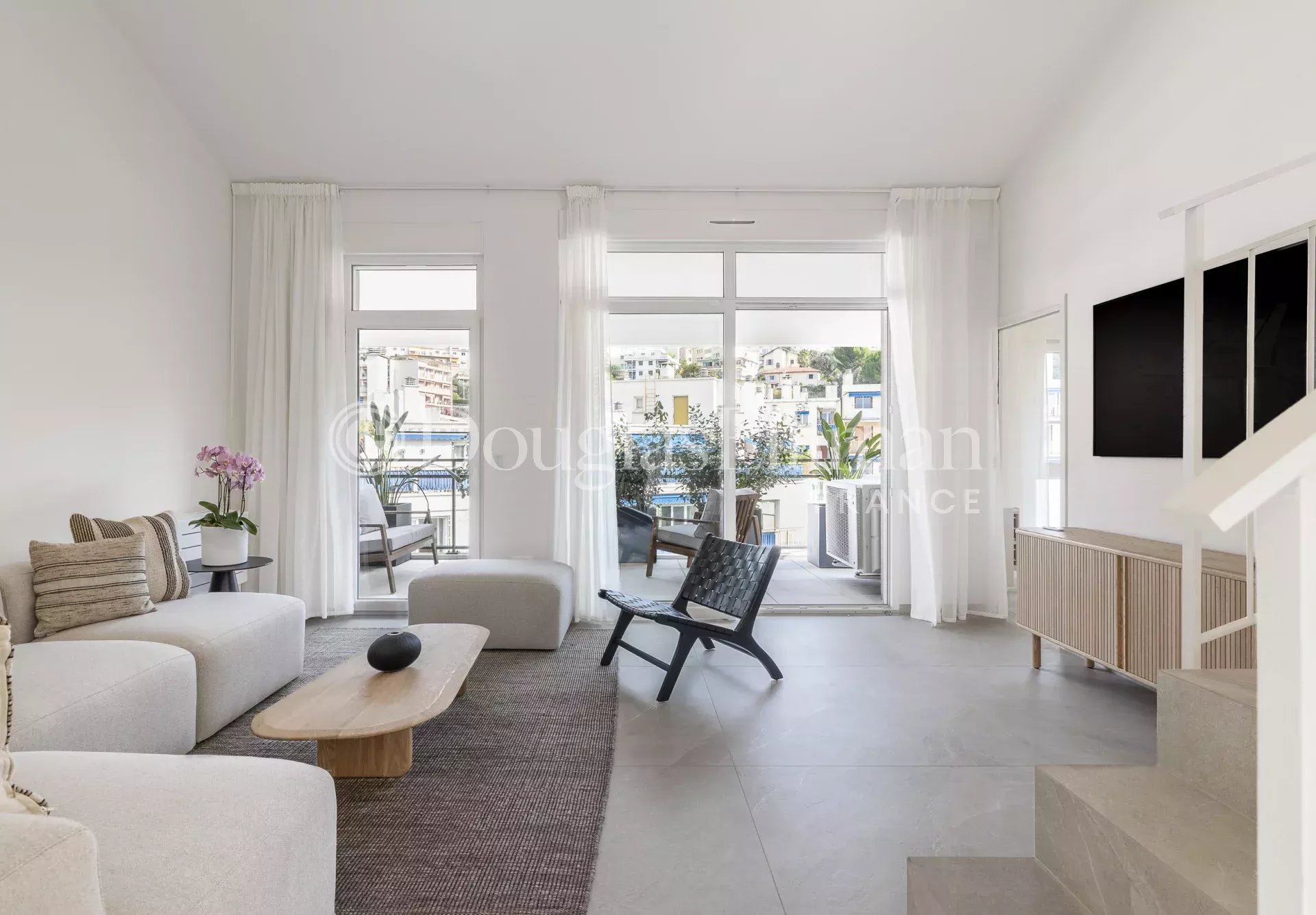
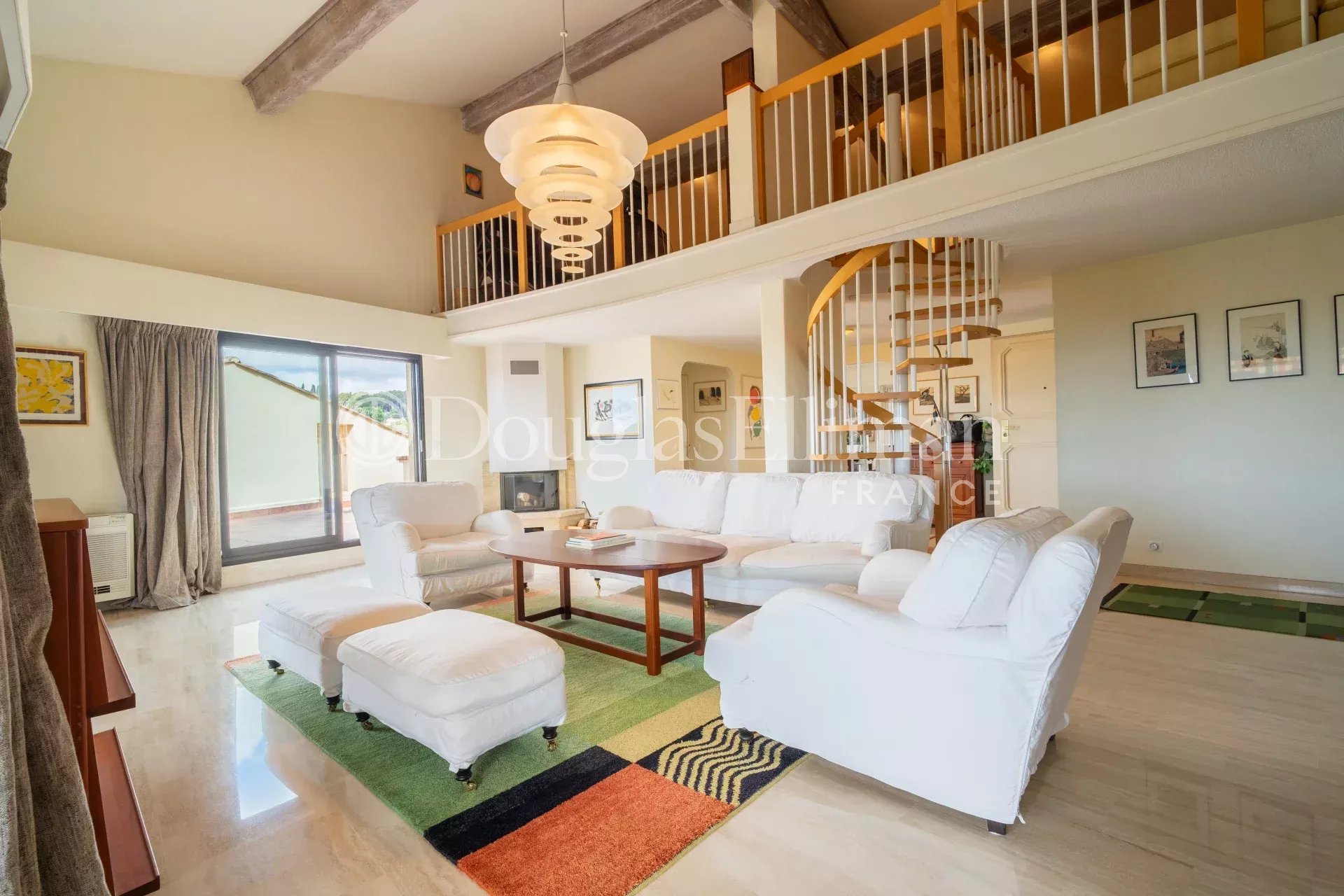
It occupies the top two levels of a building, with a vertical layout that separates reception areas from private quarters. This configuration is inherited from repurposed Haussmann-era buildings. It remains the most common on the Côte d’Azur luxury market. Floor areas range from 150 to 400 m² of living space, extended by wraparound terraces. The interior staircase—often sculptural—is a central architectural element around which the layout is organized.
The Triplex Penthouse
This is the ultimate evolution of the concept. Three levels provide a certain functional stratification. The middle floor hosts reception rooms, the upper level the bedrooms, while the top floor becomes a wellness area with spa, gym, and solarium. These configurations are rarer as they logically require greater building heights, and they regularly reach 600 to 800 m² of living space.
The Sky Villa
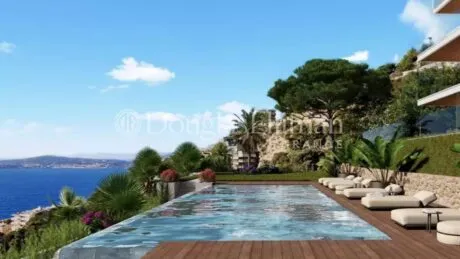
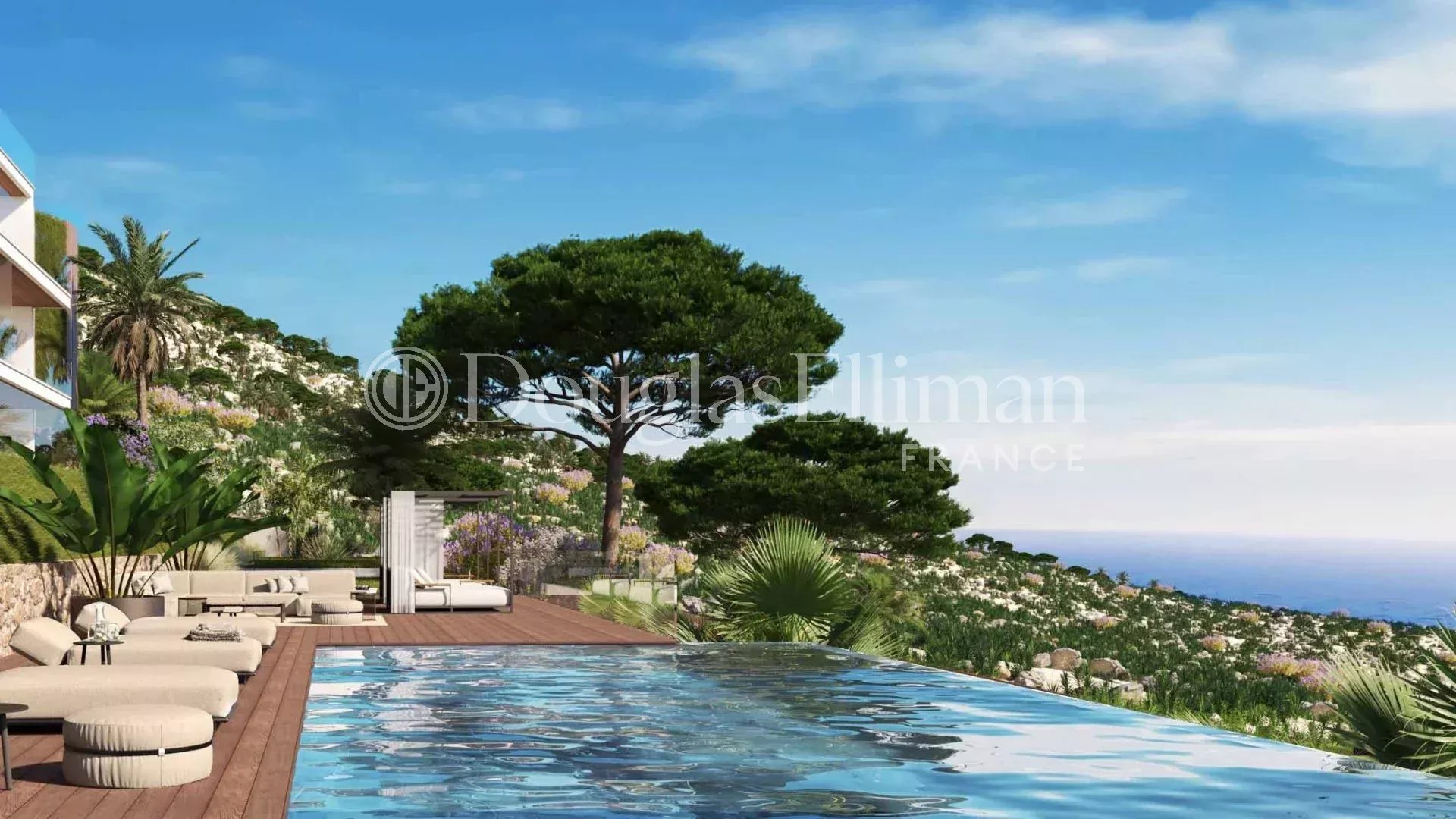
It transposes the concept of a standalone house to altitude:
- Suspended garden with topsoil on slab and automatic irrigation
- Integrated structural pool requiring specific reinforcement
- Covered outdoor areas with summer kitchen and outdoor lounge
- Private garages in the basement with a dedicated car lift
- Access via private elevator with personalized code
- Etc.
This last category has appeared in new upscale developments. The structural loads—a 50 m³ pool represents 50 tonnes—require reinforcement from the design stage, making such creations impossible in renovation.
Technical Constraints and Architectural Feats
The technical challenges faced by architects and engineers largely explain the price differences with lower floors.
Wind Management
This is the primary constraint. From the 8th floor upwards, gusts can reach twice ground-level speeds. Guardrails must withstand pressures of around 170 kg/m²; awnings and pergolas require reinforced anchoring; plantings need weighted planters and hardy species. Glass windbreak systems in 12 mm laminated glass, mounted on steel structures, can represent an investment of several hundred thousand euros!
Terrace Waterproofing
This constraint also draws major focus during fit-out. The multilayer build-up—vapor barrier, insulation, EPDM membrane, heavy protection, surface finish—must guarantee absolute waterproofing while accommodating thermal expansion. Accessible terraces require invisible yet effective slopes, oversized drains, and waterproofing upstands of at least 20 cm.
Specific Technical Equipment
These are what distinguish a true penthouse. For example:
- Air-to-air heat pump air-conditioning, concealed, with no visible outdoor units
- Double-flow mechanical ventilation with heat recovery, essential for managing condensation and humidity
- Motorized exterior blinds with wind sensors and smart-home programming
- Architectural terrace lighting with dimming and programmed scenes
- High-pressure misting system for summer cooling
- Swim spa with reinforced filtration and temperature maintenance
- Etc.
All this technical sophistication—hidden yet vital—justifies a price per square meter that is 30% to 50% higher than standard floors in the same building.
The Vertical Geography of French-Style Penthouses
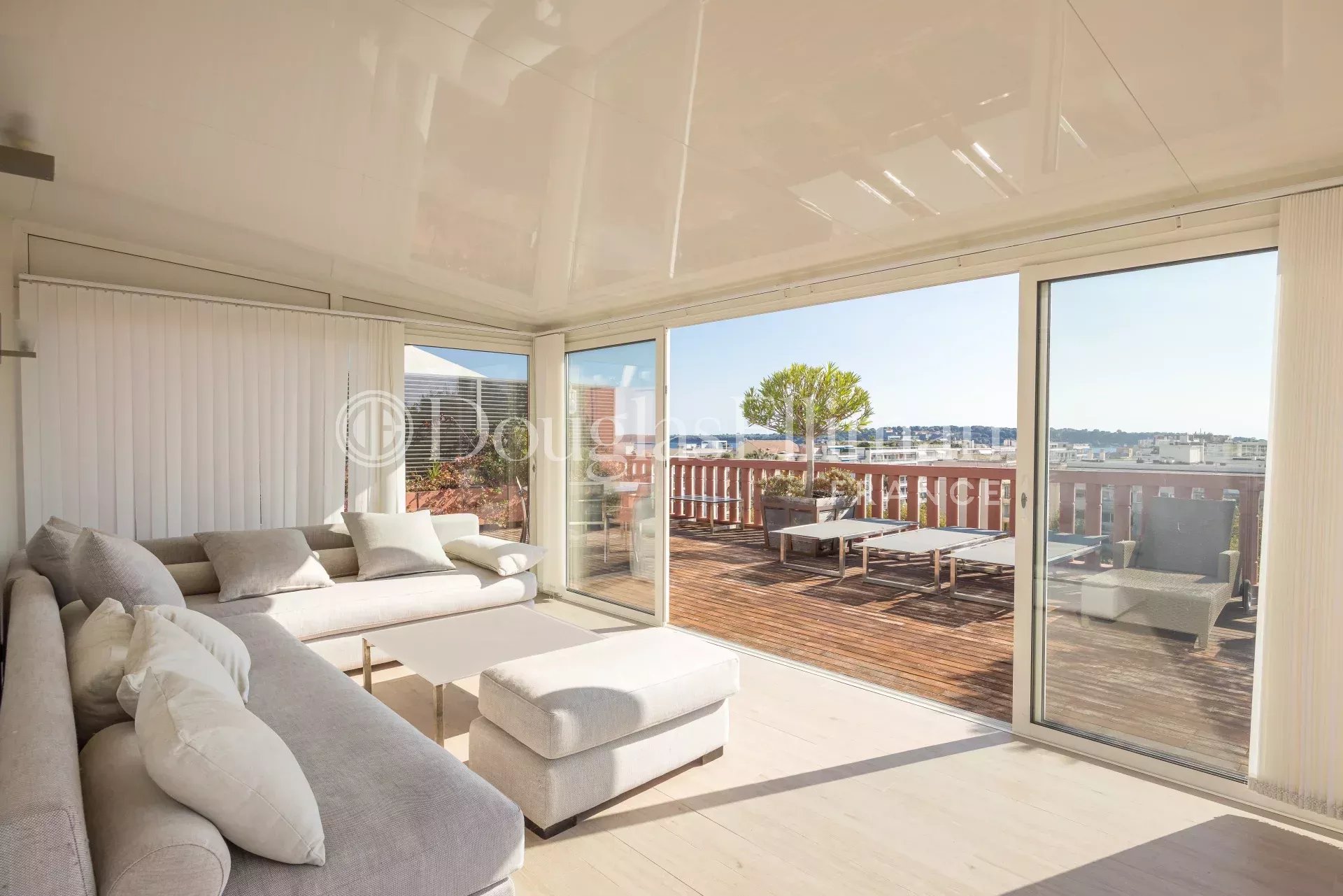
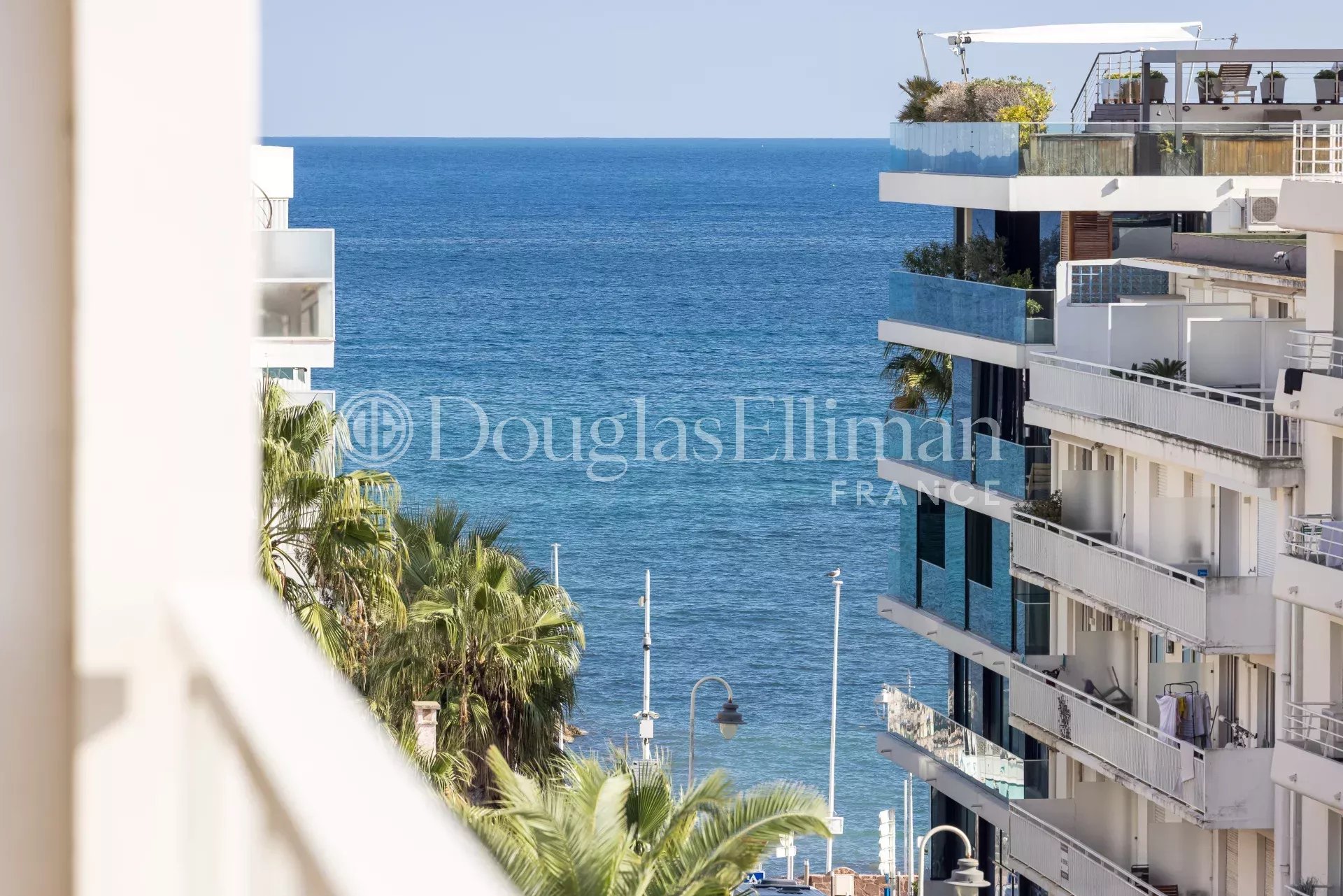
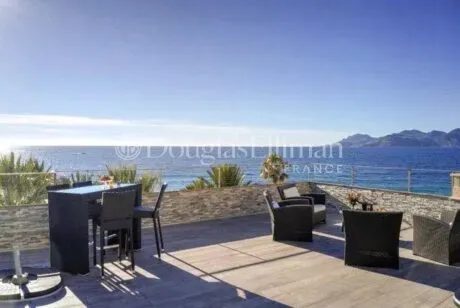
In Cannes, the Boulevard de la Croisette concentrates historic penthouses in Belle Époque buildings. The Miramar, the Gray d’Albion, the Grand Hôtel: these legendary addresses house rooftop apartments of 300 to 500 m² with front-row views over the bay. More discreetly, the Californie district offers penthouses in renovated 1970s residences, with circular terraces embracing the panorama from the Lérins Islands to the Estérel Massif.
Nice offers a differentiated selection depending on the neighborhood. Mont Boron, already perched at 200 meters above sea level, places its penthouses at dizzying heights with views reaching as far as Cap d’Antibes. The Port district is transforming, with new developments integrating sky villas from the design stage. The Promenade des Anglais maintains its prestige with Art Deco penthouses in converted palaces.
Monaco, though outside French territory, exerts the strongest influence on the regional market, starting with the French Riviera:
- Tour Odéon, with its 3,300 m² penthouse and circular infinity pool
- One Monte-Carlo, with duplexes featuring hanging gardens by Piero Lissoni
- Testimonio II, with sky villas and private elevators
These Monegasque projects set new standards that French developments naturally draw upon—within the limits of stricter French regulations.
Interior Design: Between Minimalism and Opulence
There are certain codes when fitting out a penthouse—codes dictated by both the omnipresent light and the generous volumes. In today’s market, we observe three approaches.
Contemporary Purism
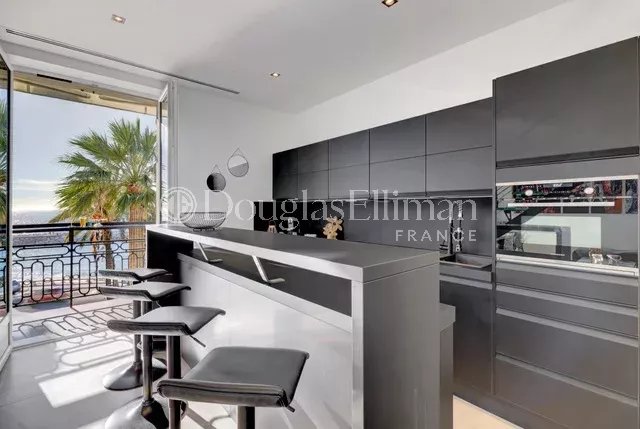
It favors raw materials and minimalist lines: polished concrete or epoxy resin floors, white walls with indirect lighting, built-in custom furniture. Popularized by agencies such as Humbert & Poyet in Monaco, this approach maximizes the sense of space and showcases the views. Kitchens by Boffi or Bulthaup, bathrooms by Agape or Antonio Lupi—every element contributes to a coherent aesthetic.
“Unapologetic” Luxury
Here, precious materials and sophisticated finishes abound: bookmatched Carrara marbles, Versailles-pattern solid oak parquet, gold-leaf gilding, Baccarat chandeliers. Favored by Middle Eastern and Russian clientele, this approach turns the penthouse into a showcase for European artisanal savoir-faire.
Yacht Style
Increasingly appreciated, it transposes the codes of luxury yachting:
- Teak or mahogany paneling with black joints like a ship’s deck
- Portholes and polished brass elements
- Disappearing/foldaway furniture to optimize space
- Outdoor fabrics resistant to UV and humidity
- Etc.
This approach, consistent with the maritime environment of the Côte d’Azur, particularly appeals to yacht owners wishing to find their aesthetic codes at altitude.
Frequently Asked Questions About Buying a Penthouse
What is the price difference between a penthouse and a standard apartment?
In an upscale building, expect to pay 20% to 30% more per square meter for a true penthouse with private terraces. This premium is, of course, tied to the quality of the features and the size of the terraces, so it can vary significantly. For sky villas with a pool and suspended garden, the premium can reach 50% to 70%. This valuation remains stable, as supply cannot structurally increase.
Are condominium fees higher for a penthouse?
Fees are generally higher due to private amenities (dedicated elevator, terrace maintenance) and a larger share in common areas. Triplex penthouses or those with a pool may see fees double. Installing solar panels or an individual heat pump can, however, reduce energy costs.
How is noise managed at height?
Contrary to popular belief, penthouses often offer better acoustic comfort, being removed from street noise. Wind can create whistling in poorly adjusted joinery. Acoustic glazing 44.2/16/44.2 and marine-grade sealing gaskets eliminate these issues. The absence of neighbors above remains the decisive acoustic advantage.
Can you structurally modify an existing penthouse?
Modifications are possible—but highly regulated. Creating a pool or altering façades requires co-ownership approval and often a structural study. Terraces can generally be redesigned freely in compliance with the building regulations. New-build projects now include technical allowances that enable future upgrades.
How liquid is a penthouse on the resale market?
High-quality penthouses, well located and well maintained, find buyers within timeframes comparable to other prestige properties. Their scarcity sustains demand. Atypical layouts or excessive fees can lengthen timelines. Penthouses with a private elevator and parking are the most liquid in the segment.
What are the essential criteria that distinguish a true penthouse from a simple top-floor apartment?
A genuine penthouse stands out through key elements such as private, directly accessible terraces; dedicated access (often a private elevator); exclusive features; and often a considered architecture (duplex, triplex, or sky villa). By contrast, some top-floor apartments are marketed as penthouses without these specifics, which markedly affects both comfort and value.